Copperfield Chimney Sweep in El Monte: A Homeowner’s Guide
Copperfield isn’t a chimney sweep company. It’s a wholesale supply distributor that sells professional-grade chimney components to trade contractors. So when you see “Copperfield” mentioned on a chimney company’s website, you’re looking at a signal about where they source materials, not a service brand. That distinction matters more than most El Monte homeowners realize. If you’d rather skip the research and talk to a company that sources from professional supply chains, call Sherwood Chimney Sweep home at (833) 589-8498.
What Copperfield Chimney Supply Actually Is
Copperfield Chimney Supply operates as a B2B distributor. They don’t sell to homeowners walking in off the street. Their customers are chimney professionals, hearth retailers, and certified installers who hold trade accounts. The catalog runs deep into categories most people never see: stainless steel liner systems, chimney caps engineered for specific wind patterns, dampers built to seal at the throat, and specialized sealants for masonry repair.
Here’s the thing. A chimney company in El Monte that buys from Copperfield is buying from the same supply chain that certified chimney engineers specify. That’s not marketing language. It’s a procurement decision. The alternative is a contractor picking up a universal-fit cap from the hardware store aisle, which is built to a price point, not a performance standard. We’ve pulled enough corroded retail-grade caps off El Monte chimneys to know the difference shows up within a few seasons, especially with the temperature swings and Santa Ana winds this area gets.
When you’re evaluating a chimney company, asking where their materials come from is one of the fastest ways to size up how they operate. A contractor who can name their supplier without hesitation is usually a specialist. One who says “whatever fits” is telling you something too.
Why Professional-Supply Materials Outlast Retail-Grade Parts
The gap between trade-supply and big-box chimney parts isn’t subtle once you know what to look for. It comes down to metal gauge, fitment, and engineering for actual weather conditions.
- Chimney caps: A Copperfield-sourced cap is designed for a specific flue dimension and often engineered for wind resistance. The retail version is typically a one-size-fits-all lid that leaves gaps or creates turbulence, which pulls smoke back into the house on windy days. In El Monte, where Santa Ana gusts push 40 to 50 mph in the foothills, that’s not a cosmetic issue. It’s a draft failure.
- Stainless steel liners: Professional liner systems, like the DuraFlex line we stock through Copperfield’s supply network, are manufactured with specific alloy grades designed for flue gas exposure and thermal cycling. Hardware-store equivalents are thinner, flex differently, and degrade faster under repeated hot-cold cycles.
- Dampers: A proper throat damper from a trade supplier seats correctly and controls air leakage. A generic replacement often leaves a gap you can’t see, but you’ll feel it in your heating bill and notice it in the smoky smell that lingers after a fire.
- Masonry sealants and repair compounds: Products like Gelco and HeatShield are only available through professional channels. They’re formulated for chimney conditions specifically, not general exterior sealing. A retail caulk will not survive direct flue gas exposure.
Realistic lifespan numbers tell the story. A quality stainless steel liner from the professional supply chain typically lasts 15 to 20 years or more with annual inspections. A retail-grade liner, if it even fits properly, might fail in 7 to 10. A pro-spec chimney cap can last 15 years or more. The $40 universal cap from the home center might look rough in 3 years in El Monte’s sun and wind.
This isn’t an upsell argument. It’s simple math. The cheaper part gets replaced two or three times before the professional part needs its first serious look.
How to Ask Where Materials Come From (And What Answers Mean)
You don’t need to become a chimney materials expert before hiring someone. You need to ask two or three pointed questions and listen carefully to how the answer sounds.
Start simple: “Where do you source your chimney components from?”
Answers that build confidence:
- “We buy through Copperfield or Olympia Chimney.” That’s a named trade distributor. It means the company has a trade account and buys from a professional catalog.
- “We stock DuraFlex liners and HeatShield for liner repair.” Specific brand names, tied to specific products, tell you they work with proprietary systems, not generic parts.
- “We can show you the exact cap or liner we’re recommending before we install it.” A specialist who’s proud of their materials will walk you through them.
Answers that warrant caution:
- “We just use what’s available.” That usually means whatever the local hardware store stocks.
- “The brand doesn’t really matter.” It does. Metal gauge, alloy, and fit all change performance.
- “It’s a universal part, fits everything.” Universal-fit in chimney work is often code for “fits nothing well.”
The companies that can name their supplier are the ones that have made a decision about quality. The ones that can’t are usually buying reactively, and you’re the one who absorbs the cost of that approach down the line.
What This Means for Older El Monte Homes Specifically
El Monte’s housing stock leans older. A lot of the chimneys we inspect here were built in the 1950s through the 1970s, and many have either original masonry liners or liners that were installed decades ago. Clay tile liners crack. Mortar joints between tiles erode. The combination of decades of use and Southern California’s seismic movement means many of these systems need attention.
When a chimney in an El Monte home needs a liner replacement or repair, the choice of materials becomes the entire conversation. A stainless liner from the professional supply chain is sized to the existing flue, installed with proper insulation, and rated for the appliance type. A cheaper liner might physically fit, but if it’s too thin or improperly insulated, it creates a new set of problems: draft issues, condensation, and in the worst case, a house fire that starts with undetected flue gas leakage.
The HeatShield system is relevant here. It’s a ceramic resurfacing product that restores deteriorating flue liners without a full tear-out. Most basic sweep companies can’t offer it because it requires certification and access to proprietary materials. When we come across an older El Monte chimney with cracked clay tiles but otherwise sound structure, HeatShield gives us a restore-before-you-replace option. That’s concrete cost savings versus a full liner rebuild, and it’s only possible because the materials come through a professional channel.
This is where the supply chain question stops being abstract. In a 60-year-old El Monte house, the difference between a professional-spec repair and a hardware-store patch could be a five-figure repair bill versus a four-figure one, and a chimney that’s actually safe versus one that’s just temporarily quiet.
Copperfield Product Categories That Matter in Southern California
Three categories from the Copperfield catalog show up regularly in our El Monte work because they align with the local climate and the challenges we see most often.
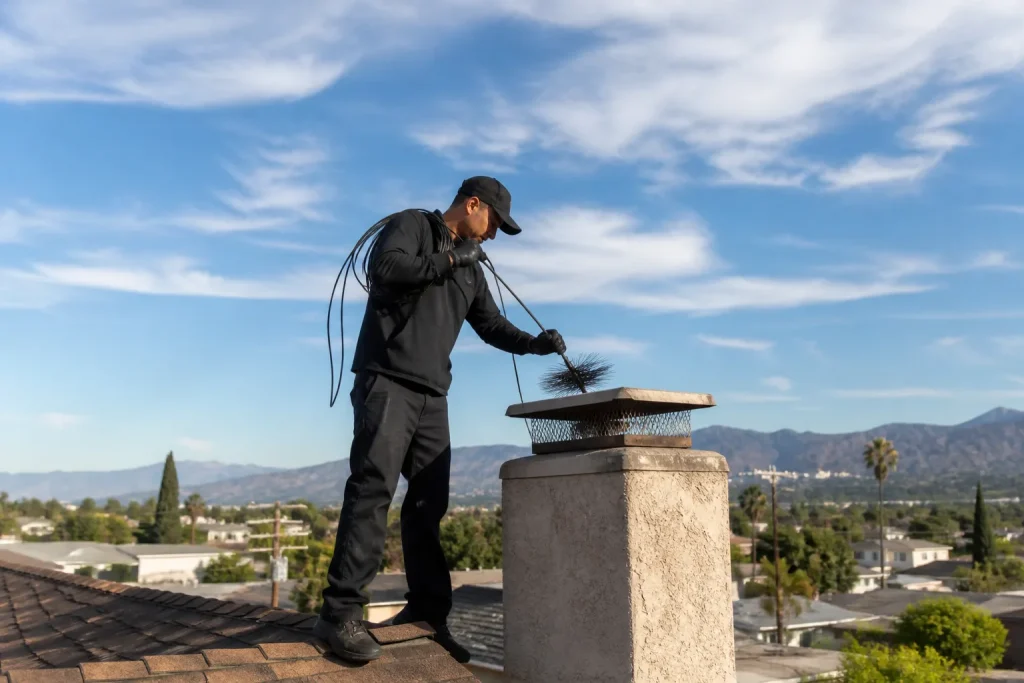
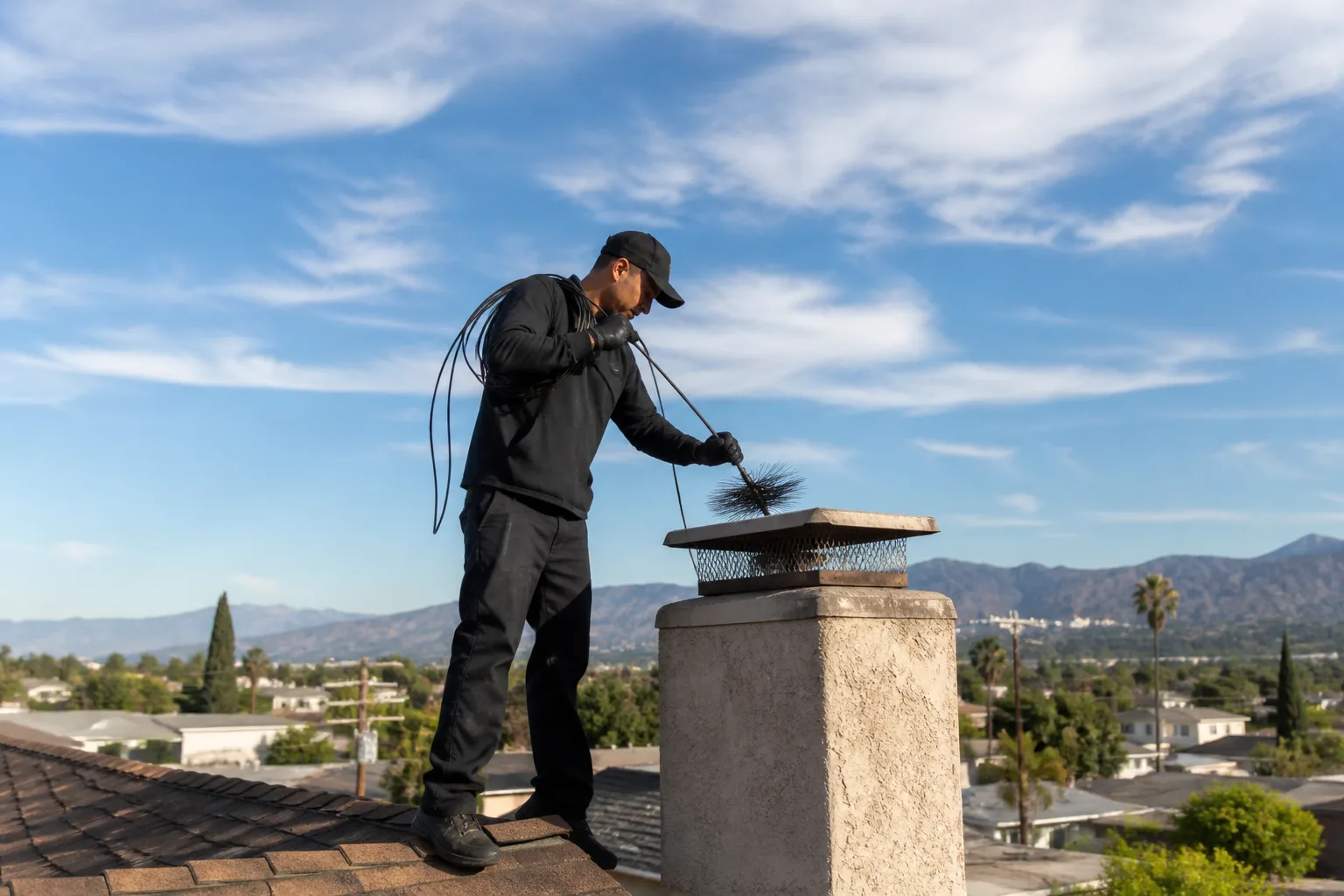
Wind-resistant chimney caps: The Santa Ana winds aren’t just a fall nuisance. They create real draft reversal problems. A properly designed cap deflects wind and maintains upward draft while keeping rain, debris, and birds out. The retail caps most homeowners recognize are simple rain hats. They stop moisture but do nothing for wind interference. In neighborhoods like Mountain View and North El Monte, where chimney height and surrounding rooflines can create odd wind patterns, the cap design matters more than you’d think.
Stainless steel liner systems: Southern California’s mild winters mean fireplaces get used inconsistently. A chimney that sits unused for months, then gets a hot fire, goes through thermal shock cycles. Stainless liners from the DuraFlex line handle that expansion and contraction better than any clay tile or thin-walled alternative. Even less obvious is the corrosion resistance, which matters in a region that occasionally gets rain but more often deals with temperature swings and humidity shifts.
Professional dampers: A damper might be the single most overlooked component in a chimney system. When it doesn’t seal, you lose conditioned air in summer and heated air in winter. It’s a year-round slow leak. Professional dampers sourced through trade suppliers seal tighter and last longer than the plate-style dampers most homes already have. We see plenty of El Monte houses where a damper replacement pays for itself through reduced energy loss within two or three seasons.
The common thread across all three is this: they’re engineered for specific performance characteristics, not just installed for form. You might not see the difference from your couch. But you’ll see it in how the chimney drafts, how long the components last, and whether you’re calling for a repair every few years or once a decade.
When to Call a Pro
Any time you’re dealing with the interior of a chimney, the liner, or the structural masonry, you’re outside DIY territory. A visual inspection from the roof might feel approachable, but identifying a failing liner or hidden mortar joint issue takes training and the right equipment. We use camera inspection on every job, and the things that show up on camera are rarely visible from the top or the fireplace opening.
If you’re in El Monte and want an honest assessment of what your chimney needs, not a sales pitch, that’s exactly what we do. Related services: Chimney Sweep in South Pasadena covers our full cleaning scope, and if the inspection turns up structural issues, our Chimney Repair in South Pasadena team handles everything from crown cracks to liner replacement. We also do Dryer Vent Cleaning in South Pasadena because a clogged dryer vent is the leading cause of household dryer fires, and most homeowners never think about it until there’s a problem.
The Bottom Line
Copperfield is a name that signals a standard. It means a chimney company is sourcing from a professional trade distributor instead of whatever’s on the shelf at the nearest big-box store. For an El Monte homeowner, that translates to longer-lasting materials, better draft performance, and repair options like HeatShield that restore instead of replace. Ask where materials come from. If a company can’t name their supplier, think hard before signing anything.
If you’re in El Monte and need a chimney swept, inspected, or repaired, Sherwood Chimney Sweep offers free estimates. We source from the professional supply chain, we show you what the camera sees, and we don’t recommend work that doesn’t need doing. Call (833) 589-8498 to schedule.
Frequently Asked Questions
Is Copperfield a chimney sweep company? No. Copperfield Chimney Supply is a wholesale distributor that sells professional-grade chimney components to trade contractors. They do not perform services for homeowners. When a chimney company references Copperfield, it means they source materials through a professional trade supply chain.
How much does a chimney sweep cost in El Monte? A standard chimney sweep and inspection in El Monte typically runs between $150 and $300 depending on chimney height, accessibility, and the amount of creosote buildup. If the inspection turns up liner damage or masonry issues, those are separate repair costs. Call (833) 589-8498 for a free estimate based on your specific chimney.
Do professional-grade chimney materials really last longer? Yes. Professional stainless steel liners typically last 15 to 20 years or more with proper maintenance, while cheaper retail-grade liners often fail within 7 to 10 years. The same pattern holds for chimney caps: a trade-supply cap can last 15 years, while a universal-fit cap from a hardware store might need replacing in 3 to 5 years in El Monte’s climate.
What’s the difference between a chimney cleaning and an inspection? A cleaning removes creosote, soot, and debris from the flue so the chimney drafts safely. An inspection uses cameras and visual assessment to check the liner, masonry joints, crown, cap, and damper for damage. The two always go together. You can’t safely inspect a dirty flue, and you shouldn’t sweep one without checking the condition afterward.
Written by the team at Sherwood Chimney Sweep, serving El Monte since 2017.
Need Chimney Cleaning Help?
Call Sherwood Chimney Sweep — licensed & insured, here with fast after-hours help in El Monte.
(833) 589-8498