
Last updated October 31, 2026
 Sweep & inspection
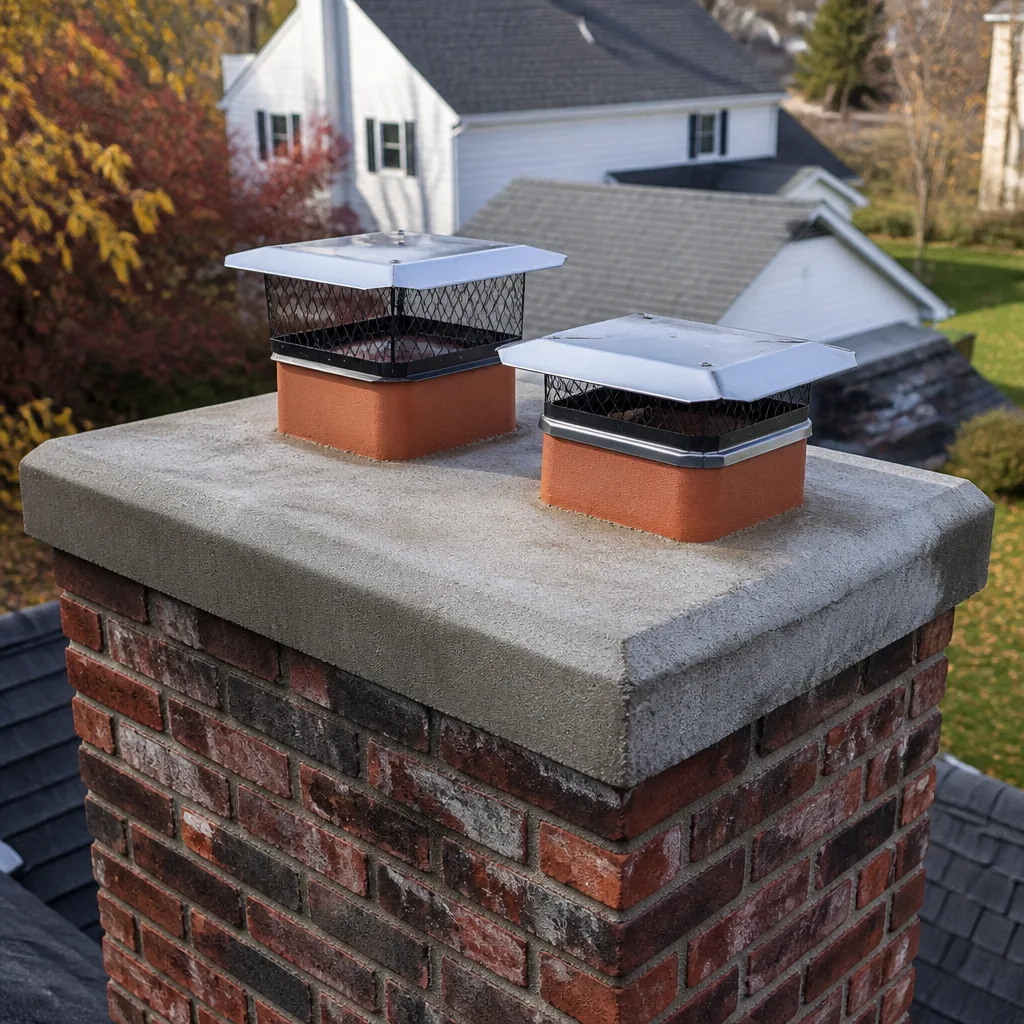
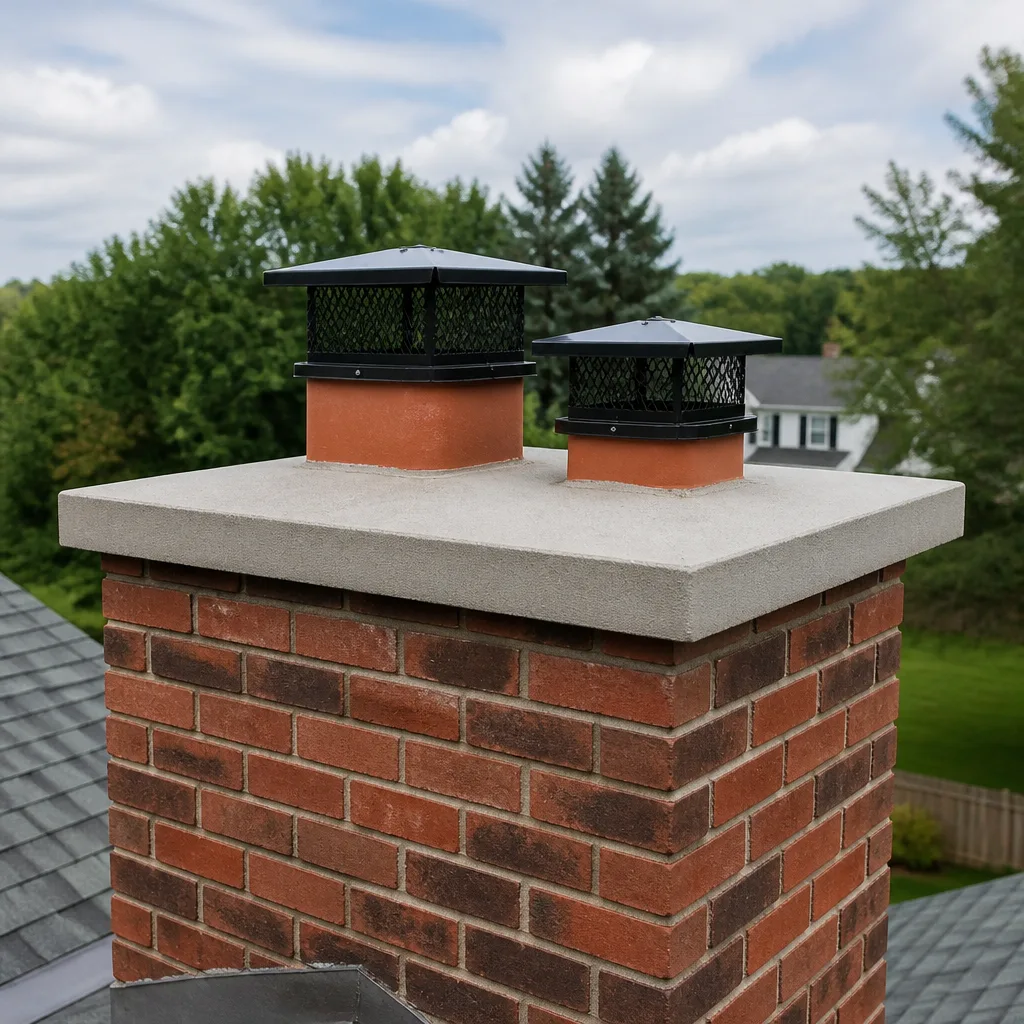 Caps & crowns
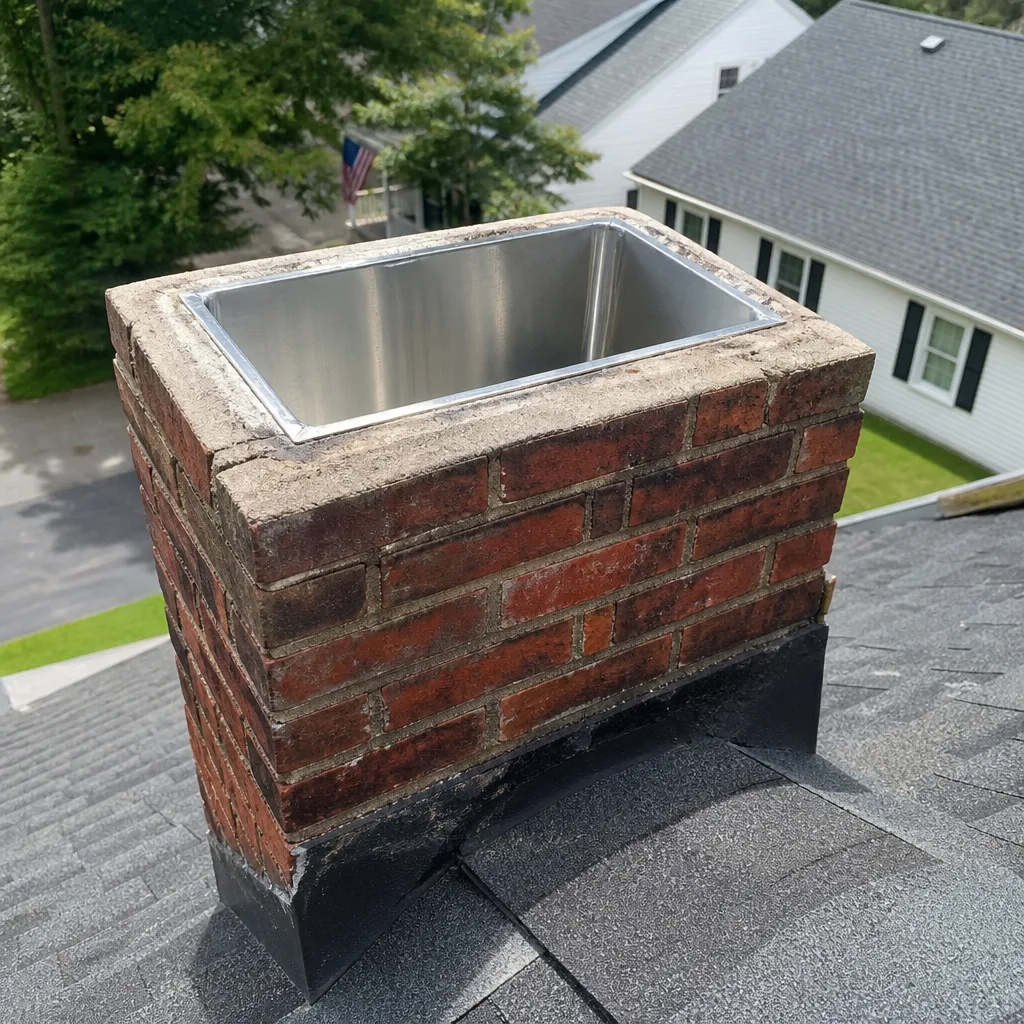 Flue relining
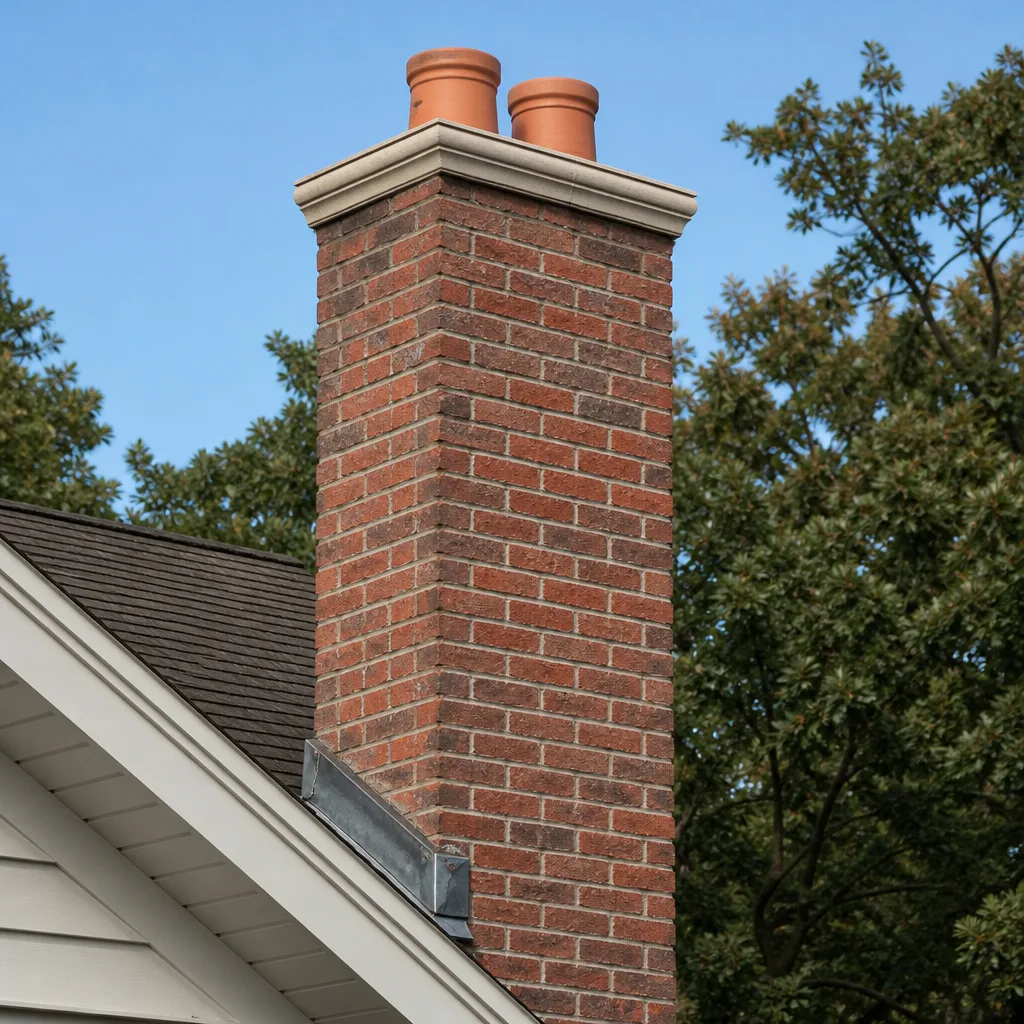 Masonry repair
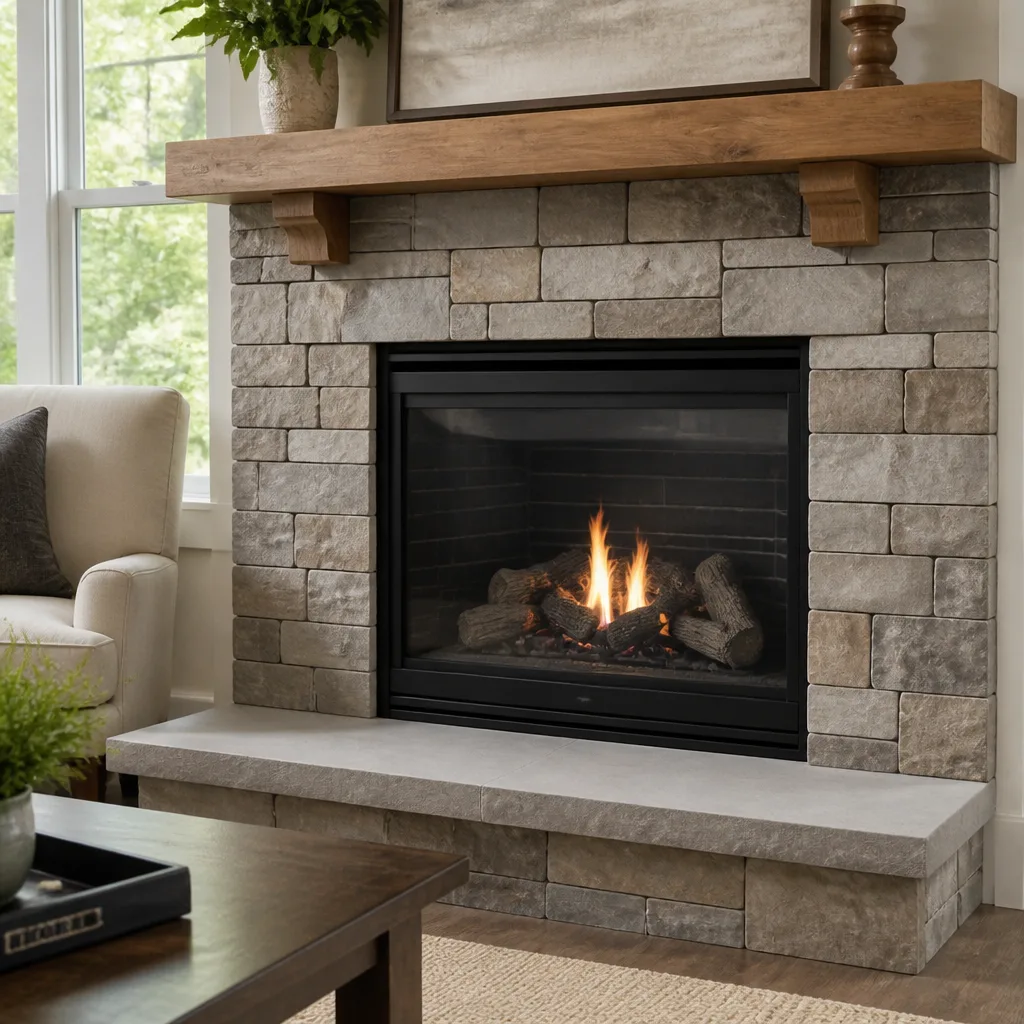 Gas fireplace service
Level 1 sweep and inspection to the NFPA 211 annual standard - flue, crown, cap, and flashing checked and photographed
Chimney sweep logs do not sweep chimneys. They loosen some creosote - which then falls where a brush and vacuum still have to collect it.
How to Hire a Chimney Cleaning Contractor in El Monte: A Step-by-Step Guide
Here’s a fact most El Monte homeowners don’t know until it’s too late: California has no state license specifically for chimney sweeping. The contractor who shows up at your door could be a certified specialist with thousands of inspections behind them, or a general handyman who added “chimney cleaning” to a business card last spring. The difference matters more than it does for almost any other home service, because a chimney isn’t a surface to be cleaned. It’s a fire-containment system running through the center of your house. This guide walks through exactly how to vet contractors, what questions expose the pretenders, and how to structure an agreement that tells you precisely what work was done. For more guides & resources on chimney maintenance, explore our blog. If you own a fireplace in El Monte, these 4,000 words are worth more than the sixty-dollar difference between the low bid and the right bid.
Quick Answer
To hire a chimney cleaning contractor in El Monte, verify CSIA or NFI certification directly with the issuing organization (takes under five minutes), confirm the contractor’s general building or specialty license number on the CSLB website, and require a written scope that separates cleaning from inspection from repair before any work begins. Ask pointed questions about flue anatomy and inspection levels. Avoid any bid that bundles sweeping with unrelated services at a flat rate or refuses to explain what’s included at each tier of work. For a free estimate from a certified chimney specialist serving El Monte, call Sherwood Chimney Sweep at (833) 589-8498.
Styles & brands we work with
Table of Contents
- Understanding the El Monte Chimney Service Market
- The Credential Check: What to Ask and How to Verify
- Red Flags Specific to Non-Specialist Chimney Marketers
- Questions to Ask During the Quote Call
- Why the Lowest Bid Usually Signals Incomplete Scope
- Structuring a Written Agreement That Protects You
- Understanding Inspection Levels Before You Book
- El Monte-Specific Considerations: Climate, Housing Stock, and Code
Understanding the El Monte Chimney Service Market
El Monte sits in the San Gabriel Valley, where the housing stock skews older than much of Los Angeles County. A substantial number of homes here were built between 1940 and 1970, and many still have their original masonry chimneys. That means the local chimney service market serves two very different customers: the homeowner with a mid-century brick fireplace that’s been burning wood for sixty years, and the newer resident with a gas insert that came with the house and has never been inspected. Both need chimney services, but they need them for different reasons, and the contractor who understands that distinction is already more valuable than the one who treats every chimney the same.
The structural reality of El Monte’s older chimneys creates specific failure patterns. Clay tile liners crack under repeated thermal cycling. Mortar joints between tiles erode from decades of acidic creosote exposure. Crown caps built fifty years ago weren’t poured with modern expansion-joint techniques, so water intrusion is common. A chimney cleaning contractor working in this market should be able to talk about these things without pausing. When a contractor can’t describe what a spalled brick looks like or what a Level 2 inspection covers, they’re likely not looking at your chimney as a system. They’re looking at it as a surface.
This matters because El Monte has no shortage of general home-service businesses that list chimney sweeping as an add-on. Pressure-washing companies, gutter cleaners, even some pest-control firms include chimney cleaning in their service menus. There’s nothing inherently wrong with that, except that a chimney sweep who shows up with a shop vac and a wire brush may remove visible soot while missing what’s actually happening inside the flue. That’s not a cleaning. That’s a false sense of security. Our Sherwood Chimney Sweep home service area includes El Monte specifically because we see this pattern repeated across the San Gabriel Valley.
The Credential Check: What to Ask and How to Verify
Here’s the single most useful thing you can do when hiring a chimney contractor: ask them to name their certification. Not “are you certified,” which invites a yes. Ask for the specific acronym. A certified specialist will say “CSIA” or “NFI” or both without hesitation. A handyman with a broom will pause, or say “we’re fully licensed” which means nothing for chimney work specifically. In California, chimney work falls under general contractor licensing categories, most commonly C-61 (limited specialty) or the broader B (general building) classification. No state license exists that certifies chimney expertise. So the CSIA and NFI credentials from national organizations carry the weight.
Verifying these credentials takes under five minutes. Here’s the step-by-step:
- Ask for the credential number during the initial call. Every CSIA and NFI certification comes with a number. If the contractor won’t provide it, that’s a signal, not a dealbreaker, but it should be noted.
- Go to the CSIA website’s “Find a Professional” directory and enter the company name or the individual’s name. The directory shows current certification status, including expiration dates.
- Check the NFI site for gas-related certifications if you have a gas fireplace or insert. NFI has separate certifications for gas, wood, and pellet.
- Verify the contractor’s license on the CSLB website. Enter the license number they provide. Confirm the classification (C-61 is common for chimney-specific work) and check for any disciplinary actions or complaints.
- Ask for proof of insurance. A legitimate chimney contractor in El Monte will have general liability coverage. Ask if they can email a certificate of insurance. It’s a standard request, and any resistance is a red flag.
One important note: certification alone doesn’t guarantee quality. There are certified sweeps who do mediocre work. But certification dramatically increases the probability that the contractor approaches the work systematically, follows industry inspection standards, and has invested in training. In a market like El Monte where anyone can hang a shingle, that’s a meaningful filter.
Sherwood Chimney Sweep is certified to apply HeatShield flue sealant and resurfacing, a proprietary restoration system that general contractors can’t access. That matters when a cleaning reveals liner damage, because we can offer the repair option rather than referring you out. Chimney Repair in South Pasadena clients have seen the same pattern: a cleaning turns into a repair consultation, and the contractor without HeatShield access has to walk away or push a full tear-out.
Red Flags Specific to Non-Specialist Chimney Marketers
After years of working in and around the El Monte chimney market, certain patterns emerge in how non-specialists advertise. These aren’t moral judgments. They’re just signals that the business doesn’t think of chimney work as a specialized trade, which means they probably don’t perform it like one either. Here’s what to look for when you’re scrolling through listings or reading flyers.
Vague scope language. A specialist describes what they’ll do: “Level 1 inspection, mechanical brushing of the flue, removal of creosote deposits from the smoke chamber, inspection of the damper assembly, check of the crown for hairline cracks.” A non-specialist says: “Complete chimney cleaning.” That’s it. No method, no scope, no mention of inspection level. You can’t hold anyone accountable for “complete cleaning” because it doesn’t define what’s complete.
Flat-rate bundling. The pressure-washing company that charges $199 for “chimney cleaning + gutter cleaning + window washing” is pricing the chimney as a line item, not as a fire-safety service. A real chimney sweep charges based on the condition of the chimney, the level of inspection required, and the type of fuel being burned. A flat bundled rate means no one looked at your chimney before quoting. A flat bundled rate for a chimney that hasn’t been touched in ten years means you’re getting the surface wiped and nothing else.
No mention of inspection levels. The chimney industry has defined three inspection levels: Level 1 for routine maintenance, Level 2 for changes to the system or property transactions, Level 3 for suspected hidden damage. This framework is national, established by the National Fire Protection Association in NFPA 211. A contractor who never mentions it either doesn’t know it exists or doesn’t want to talk about it. Either way, you’re not getting a systematic evaluation of your chimney’s safety. You’re getting a visual once-over.
Pressure tactics on liner replacement. This one cuts both ways. Some non-specialists miss liner damage entirely because they never look. Others use scare tactics to sell a complete liner replacement when a resurfacing would suffice. A contractor who recommends HeatShield, Gelco, or similar resurfacing products understands the difference between a liner that needs restoration and one that needs replacement. A contractor who only offers full teardown doesn’t know the full range of repair options, or doesn’t want you to know about them.
No physical address or local presence. A chimney contractor serving El Monte should be reachable in El Monte. Not in a call center in another state. If the website has no address, no local phone number, and no mention of any San Gabriel Valley city, you’re probably dealing with a lead-generation middleman. The contractor who shows up might be anyone. We see this pattern consistently in the El Monte area, where half the “chimney companies” that appear in a search are actually marketing fronts for rotating subcontractors.
Questions to Ask During the Quote Call
The initial phone call reveals more than an in-person estimate does, because the contractor hasn’t seen your chimney yet and is answering from knowledge, not from looking. Here are the questions that separate a specialist from a handyman with a chimney brush. These should be asked in roughly this order, and the answers should sound immediate, not hedged.
- “What level of inspection is included with your cleaning?” The correct answer is “Level 1 as part of standard service” and the contractor should be able to explain what Level 1 includes. If they can’t define the levels, they don’t work to NFPA 211 standards.
- “What specifically do you clean when you clean a chimney?” The answer should include the flue liner, smoke chamber, damper assembly, firebox, and smoke shelf. If they say “the chimney,” that’s not an answer.
- “What do you use to clean the flue?” Look for mention of appropriately sized wire or poly brushes matched to the flue dimensions. A vague answer about “special equipment” is a dodge.
- “What’s your process if you find damage during the cleaning?” A specialist has a defined process: stop work, document the issue with photos, explain the severity, discuss options including repair and resurfacing. A non-specialist either doesn’t have an answer or goes directly to replacement.
- “Do you have experience with chimneys in this area?” A local specialist can talk about what they typically see in El Monte homes: clay tile liners from the 1950s and 60s, crown cracking from San Gabriel Valley heat cycles, the specific patterns of creosote buildup from the types of wood burned locally. A generic answer about “all types of chimneys” is fine but less useful.
- “Can you email me a sample scope-of-work document?” This isn’t a standard request, which is exactly why it’s useful. A specialist has a template. A non-specialist will promise to get back to you, and then either not do it or send something two sentences long.
None of these questions is adversarial. They’re asked in the tone of a homeowner who’s done basic homework, and they signal that you’re not going to accept a surface cleaning and a handshake. The right contractor will welcome them. The wrong one will get uncomfortable.
Why the Lowest Bid Usually Signals Incomplete Scope
Chimney cleaning in El Monte runs a wide price range depending on the chimney’s condition, the owner’s cleaning history, and the contractor’s actual method. The lowest bid isn’t necessarily a scam. But in chimney work, more than in most trades, a significantly lower price usually means something is being omitted, not that the contractor is more efficient. Chimney sweeping has real costs: brushes, rods, vacuum systems with HEPA filtration, drop cloths, the time to do it properly, and the insurance that covers working inside someone’s home. When a bid comes in far below the range, the contractor is cutting somewhere.
Here’s where they typically cut:
- The inspection component. A sweep without a documented Level 1 inspection is just soot removal. The inspection is what catches the hairline crack in the flue liner that becomes a house fire. It takes time and expertise, which cost money.
- Proper containment. A contractor without a proper vacuum system or drop cloths is going to leave fine soot throughout the house. The cleaning that seems cheaper at the quote stage leaves you with a house to clean afterward.
- Smoke chamber access. The smoke chamber, the area above the damper where smoke gathers before entering the flue, is difficult to reach and often skipped by crews who aren’t thorough. It’s also one of the most common places for creosote to accumulate.
- Time on site. A proper cleaning of a wood-burning fireplace takes 45 to 90 minutes, sometimes longer if there’s heavy buildup. A crew that’s in and out in 20 minutes isn’t doing the work.
- Documentation. A legitimate sweep provides a written report with photos. The cheapest bids often provide nothing more than a receipt.
There’s another cost layer that matters in El Monte specifically. Many of the older chimneys here haven’t been inspected in decades. That means the first cleaning often uncovers issues, and the contractor who shows up armed only with brushes can’t address what they find. They’ll either miss it or tell you to call someone else. A full-service company like Sherwood Chimney Sweep carries professional-grade materials from suppliers like Olympia Chimney and Famco, meaning the repair discussion can happen on the same visit. We also offer Dryer Vent Cleaning in South Pasadena and El Monte, treating both dryer vents and chimneys as fire-prevention systems, because the logic is identical: you can’t see the danger building up inside the duct or flue, but it’s there, and it costs far less to remove it than to respond to it.
Structuring a Written Agreement That Protects You
A verbal quote followed by a handshake is how chimney work used to get done, and it’s how misunderstandings still happen. A written agreement doesn’t need to be complex, but it needs to separate three things clearly: cleaning, inspection, and repair. These are distinct activities with distinct expectations, and a good agreement makes that explicit. Here’s what should appear in any chimney service agreement.
Scope of cleaning. Define what gets cleaned: flue liner, smoke chamber, damper assembly, firebox, smoke shelf. Define the method: mechanical brushing with appropriately sized tools. Define the containment: drop cloths, HEPA-filtered vacuum, no soot migration into living spaces. If these items aren’t in writing, you have no way to hold anyone accountable for them.
Scope of inspection. Specify the inspection level. A standard cleaning includes a Level 1 inspection. If you’re buying a home, selling a home, or haven’t had the chimney inspected in years, you may want a Level 2, which includes video scanning of the flue interior. Some contractors include a basic video scan with every cleaning. That’s a meaningful differentiator, because it gives you visual evidence of what’s happening inside the flue, not just a verbal description.
Repair authority and threshold. The agreement should state that no repair work will be performed without a separate written authorization and a separate quote. This protects you from showing up to a bill that’s three times the estimate. It also forces the contractor to do the work of documenting the issue and getting your approval, which is exactly what a specialist should do.
What’s not included. A good agreement is honest about what falls outside the base price. Chimney cap replacement isn’t part of a sweeping. Crown repair isn’t part of a sweeping. If significant creosote buildup requires additional labor, some contractors charge extra. Ask what conditions would trigger additional charges, and get that in writing.
Follow-up documentation. Require a written report with photos. A professional chimney sweep documents the condition of the flue before and after cleaning. You should see what they saw. If the contractor can’t provide photos, ask why.
The agreement is where vetting becomes protection. A contractor who resists putting scope in writing isn’t necessarily dishonest, but they’re not operating at a professional level. The written agreement is the difference between “the chimney guy came and cleaned it” and “the chimney was cleaned to these specifications, inspected to this standard, and here’s the visual evidence.”
Understanding Inspection Levels Before You Book
Most homeowners hiring a chimney cleaning contractor don’t realize that “inspection” isn’t a single thing. It’s a tiered system defined by the National Fire Protection Association, and knowing the tiers helps you understand what you’re paying for and what you actually need. Here’s a straightforward breakdown.
Level 1 inspection. This is the standard inspection that accompanies routine cleaning. The chimney technician examines the readily accessible portions of the chimney: the firebox, damper, smoke chamber, and the exterior of the chimney above the roofline. The goal is to confirm that the chimney is functioning as intended and that there are no obvious obstructions or hazards. A Level 1 is appropriate when you haven’t changed anything about your chimney system and you’re having it cleaned on a regular schedule.
Level 2 inspection. This level includes everything in Level 1 plus a video scan of the flue interior and an examination of accessible attics, crawl spaces, and basements. A Level 2 is required when you’re buying or selling a home, when you’ve changed the heating appliance, when you’ve had a chimney fire, or when an earthquake or weather event may have damaged the structure. In El Monte, where earthquakes are a live concern and many homes have changed hands multiple times, a Level 2 is often the right call even when it’s not technically required. The video scan shows you the interior of the flue in high resolution, and it’s the difference between guessing and knowing.
Level 3 inspection. This level is reserved for cases where a Level 1 or Level 2 has revealed suspected hidden damage. It may involve removing portions of the chimney structure to access concealed areas. Level 3 inspections are uncommon for routine maintenance, but they’re the appropriate tool when something serious is suspected.
Most El Monte homeowners need a Level 1 with their annual cleaning, or a Level 2 if they’ve never had the chimney inspected and aren’t sure of its history. A contractor who doesn’t mention inspection levels, or who can’t explain the difference, is signaling that they don’t work to national standards. Sherwood Chimney Sweep works with professional-grade materials from the same supply chain used by certified chimney engineers nationwide, including DuraFlex liner systems and HeatShield ceramic resurfacing materials. When an inspection reveals a problem, we have the tools to fix it. Chimney Sweep in South Pasadena homeowners have told us the same story repeatedly: they’d been paying for cleanings for years, but no one had ever shown them the inside of their flue until we did.
El Monte-Specific Considerations: Climate, Housing Stock, and Code
Chimney cleaning isn’t identical in every market, and El Monte’s specific conditions create specific recommendations. Our climate is mild year-round, which means fireplaces get used seasonally rather than continuously. That’s not benign. It means creosote builds up, then sits through damp winters and hot, dry summers, hardening into a glaze that’s harder to remove than fresh creosote. El Monte’s air quality patterns also matter. The San Gabriel Valley’s notorious inversion layer traps particulate matter, and a poorly burning fireplace contributes to that. A clean chimney burns more efficiently and produces less smoke, which is better for your house and better for the air in the neighborhood.
The housing stock creates its own considerations. If your El Monte home was built between 1940 and 1970, your chimney is likely masonry with a clay tile liner. Those liners crack, and the cracks are invisible without a video scan. If your home predates 1940, which applies to portions of central El Monte and the older neighborhoods off Valley Boulevard, the chimney may have been built to lower standards than modern code requires. The mortar may be failing. The flue may be unlined, which is a genuine fire hazard. These aren’t hypothetical concerns. We see them routinely.
There’s also the question of local code enforcement. El Monte follows Los Angeles County building code for chimney work, and any structural repair, liner replacement, or major modification requires a building permit. A cleaning does not. An inspection does not. But the minute the scope shifts to repair, the permit question arises, and a legitimate contractor will be upfront about when permits are required. If a contractor offers to rebuild your chimney crown or install a new liner without mentioning permits, that’s a signal about how they operate.
For gas fireplace users in El Montent, the dynamics differ. Gas fireplaces produce less creosote than wood, but they still require inspection. Heat exchangers crack. Venting systems corrode. And gas fireplaces can produce carbon monoxide if the venting is blocked or damaged. A chimney specialist who mostly works with wood systems might not be equipped to fully evaluate a gas insert, which is why certifications like NFI gas specialist credentials matter. Ask your contractor whether they work with both wood and gas systems, and how their inspection differs for each.
Common Mistakes to Avoid
- Hiring based on price alone. A chimney sweep isn’t a commodity. The quality difference between a thorough specialist and a surface cleaner is dramatic, and the price difference is usually under $100. That’s not the place to save.
- Assuming “licensed and insured” means chimney-certified. A contractor can hold a general contractor’s license and have never spent a day inside a flue. The chimney-specific certifications are what matter, and they’re separate from state licensing.
- Skipping the video inspection. In an older El Monte chimney, the human eye alone cannot see what’s happening in the middle of the flue. A video scan is the only way to identify hairline cracks and deteriorated mortar joints before they become structural failures.
- Accepting a two-sentence contract. If the scope isn’t in writing, you have no recourse when the work is incomplete. This is one of the most common frustrations we hear from El Monte homeowners who’ve had a bad experience with a previous contractor.
- Neglecting the chimney cap and crown. The cap and crown are the chimney’s roof, and they fail over time in El Monte’s heat-cycling climate. A cleaning that doesn’t include a check of the cap and crown is missing a major source of future damage.
- Waiting until fall to book. Chimney contractors in the San Gabriel Valley book out weeks in advance during the fall rush. If you wait until the first cold night, you’ll either wait for service or pay a premium. Book during the summer when calendars are open.
See the difference
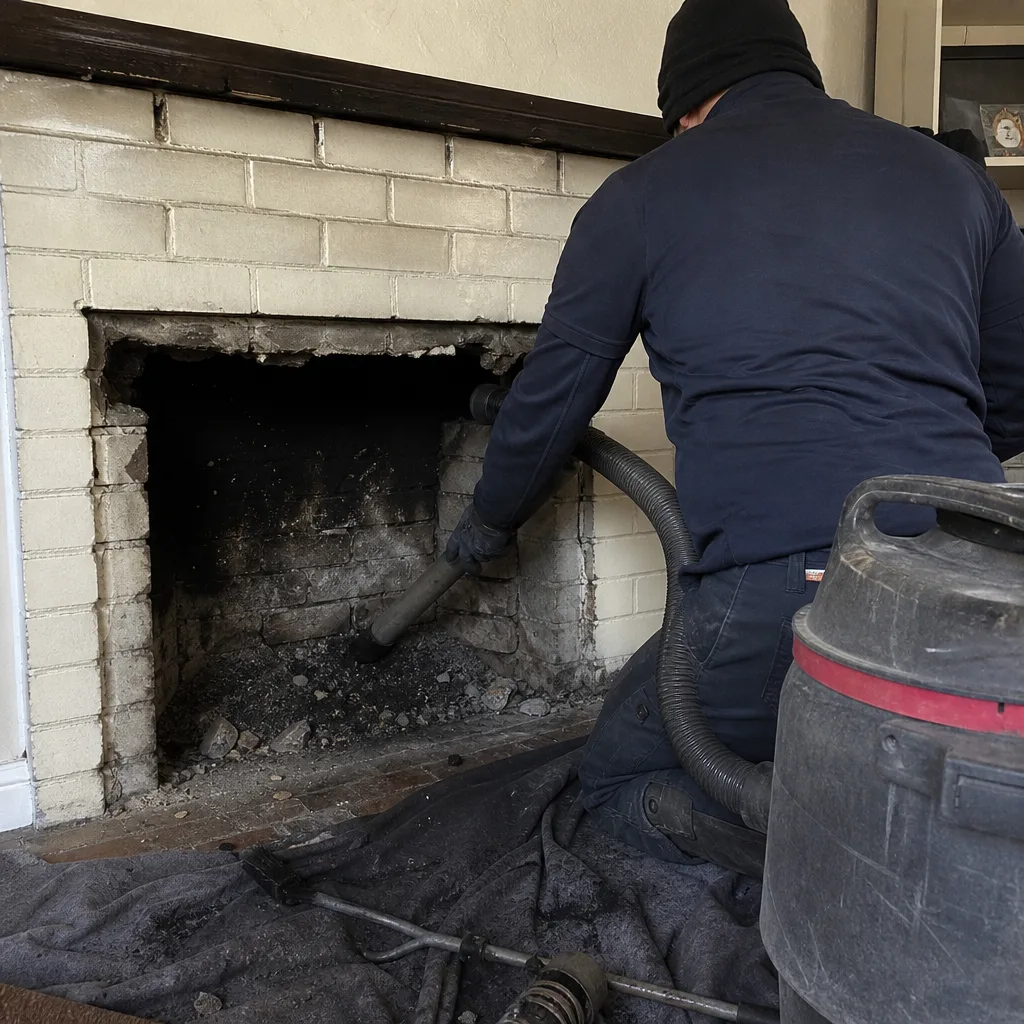 Before
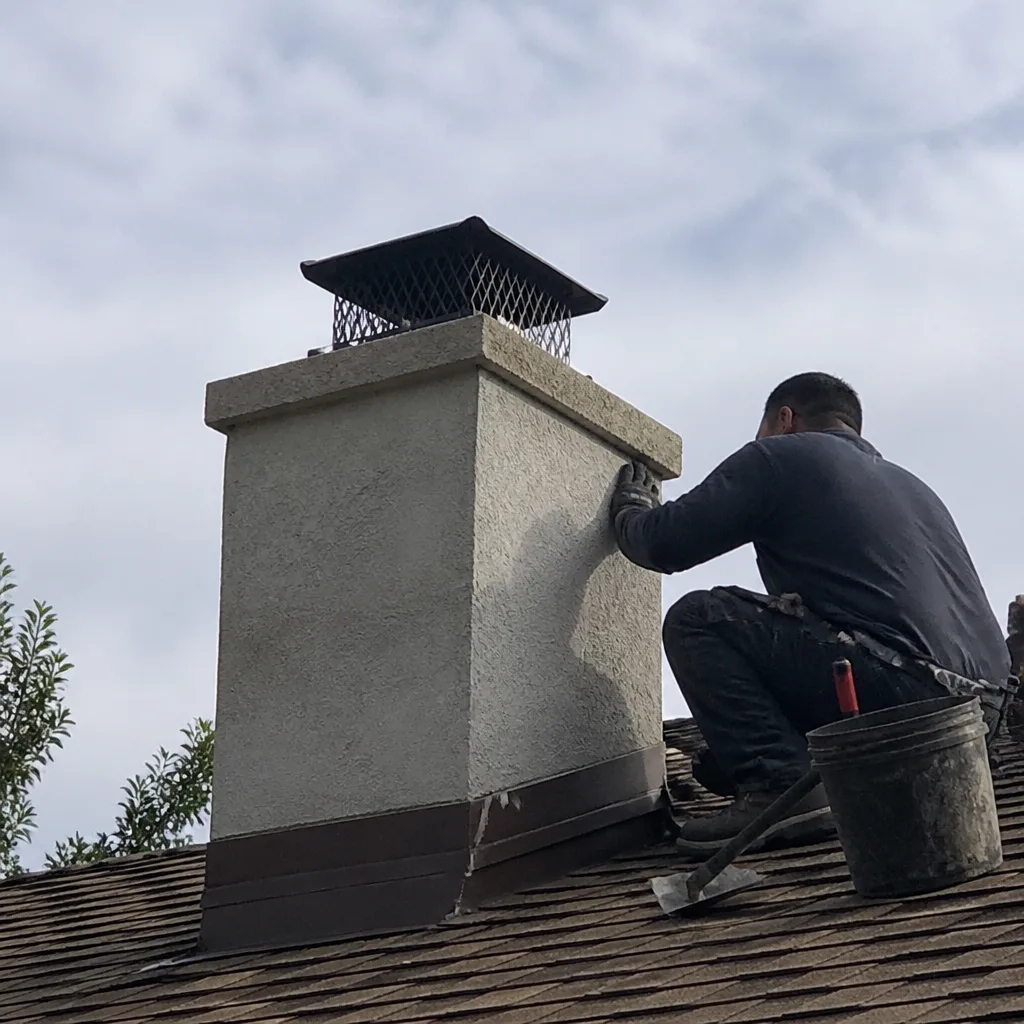 After
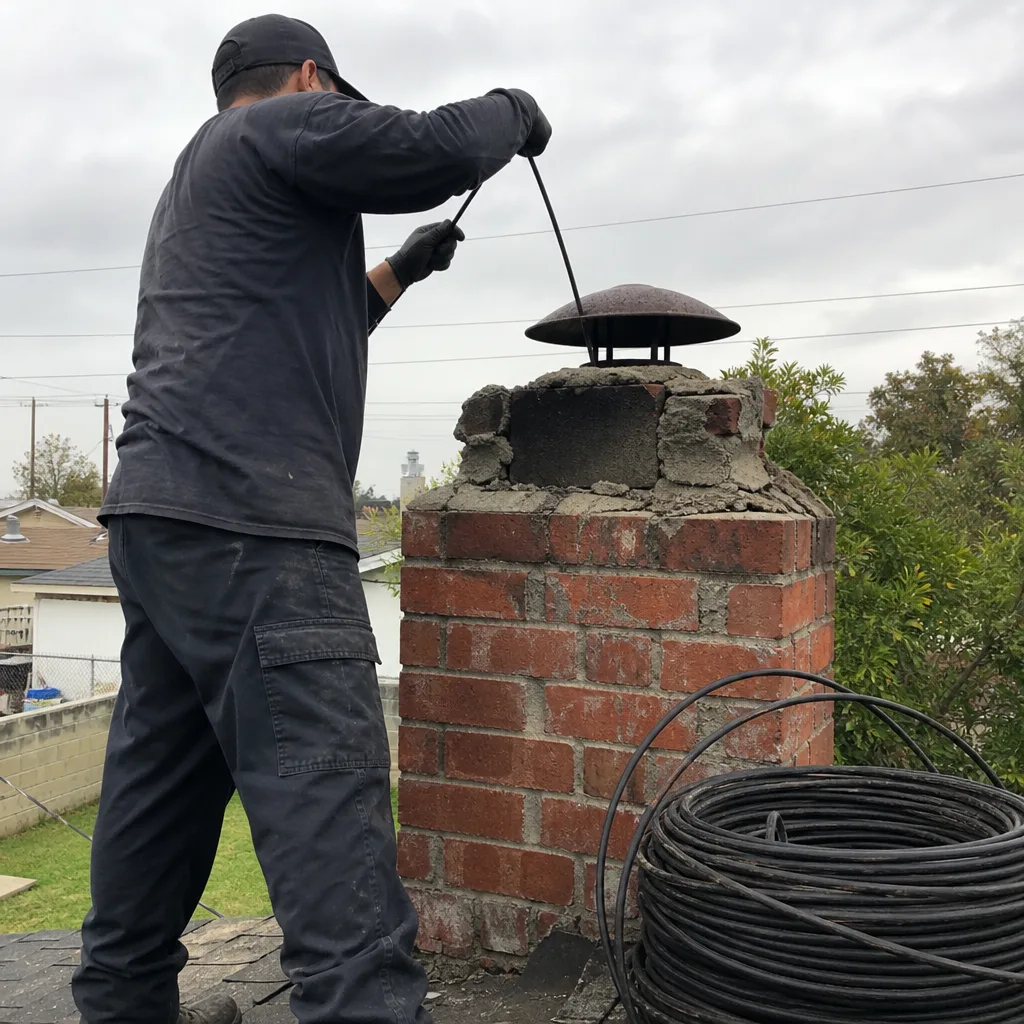 Before
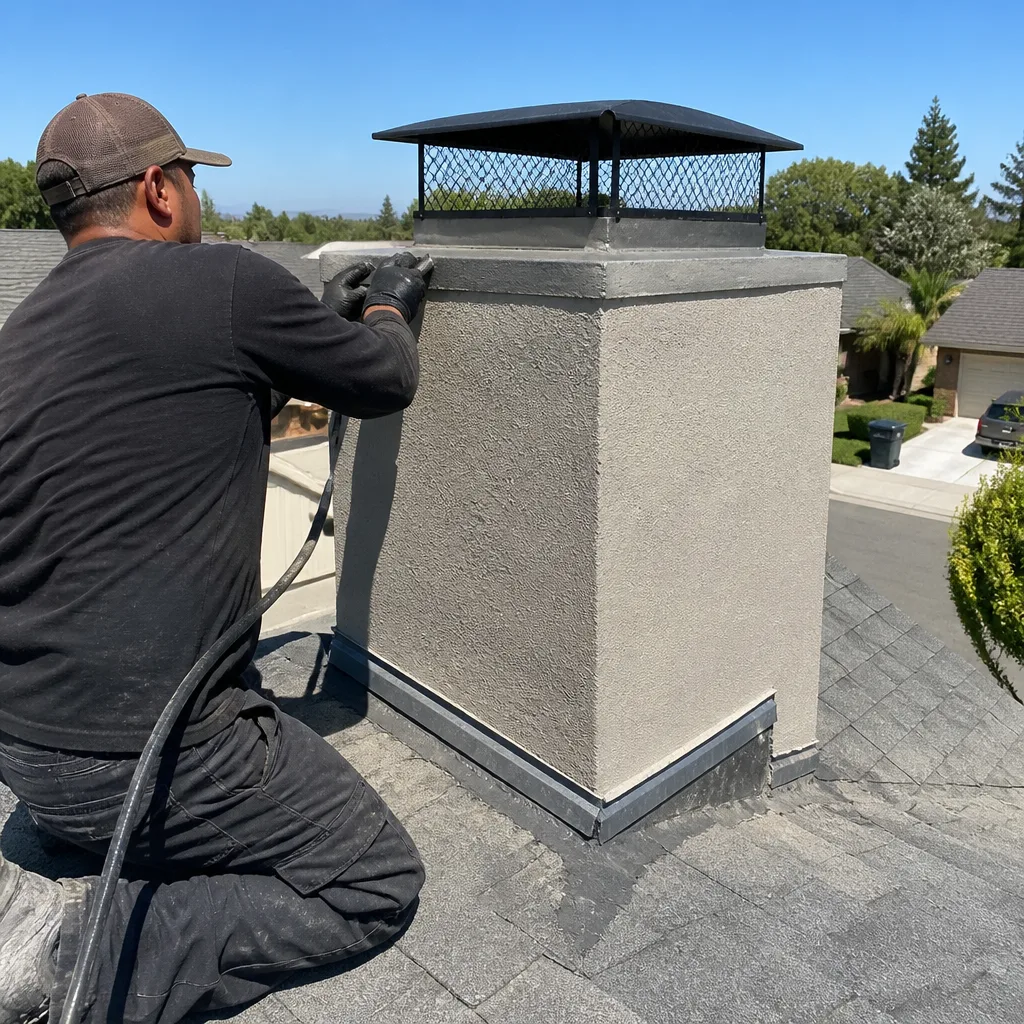 After
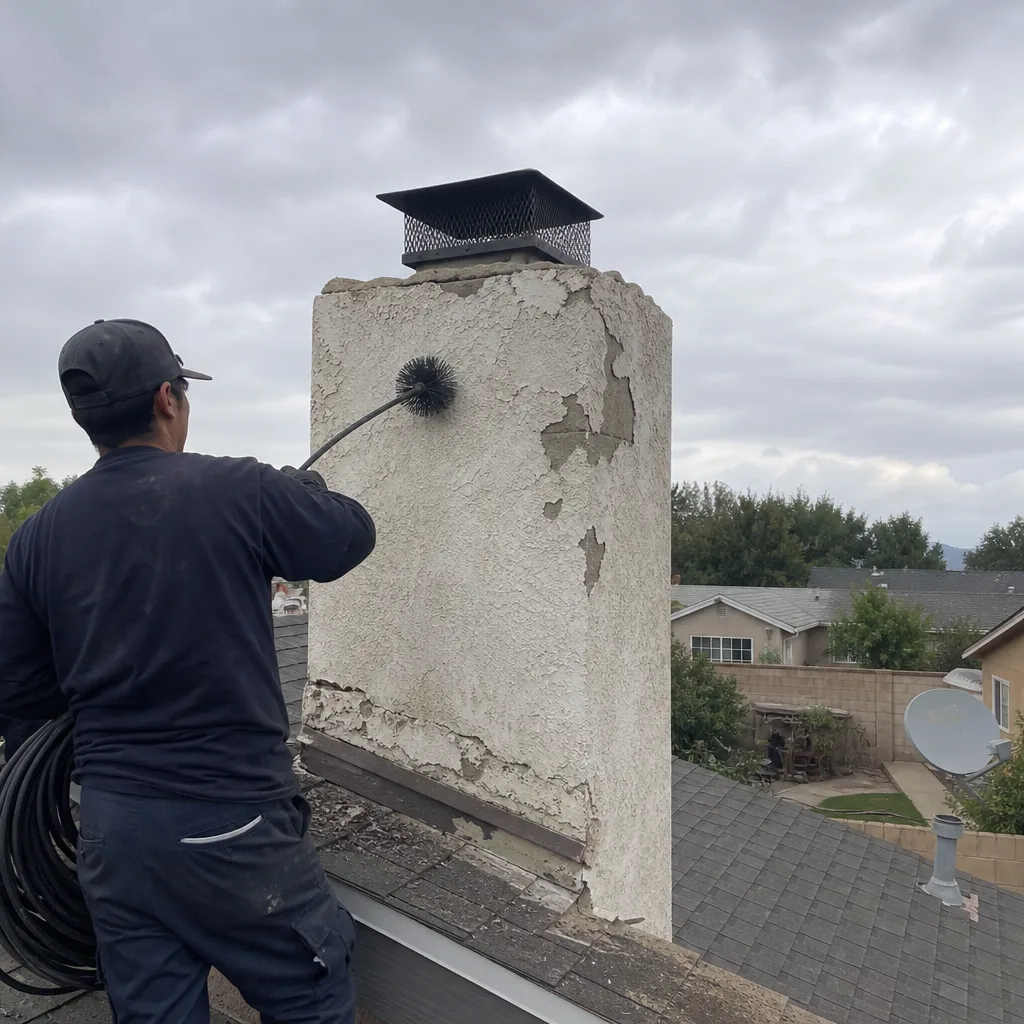 Before
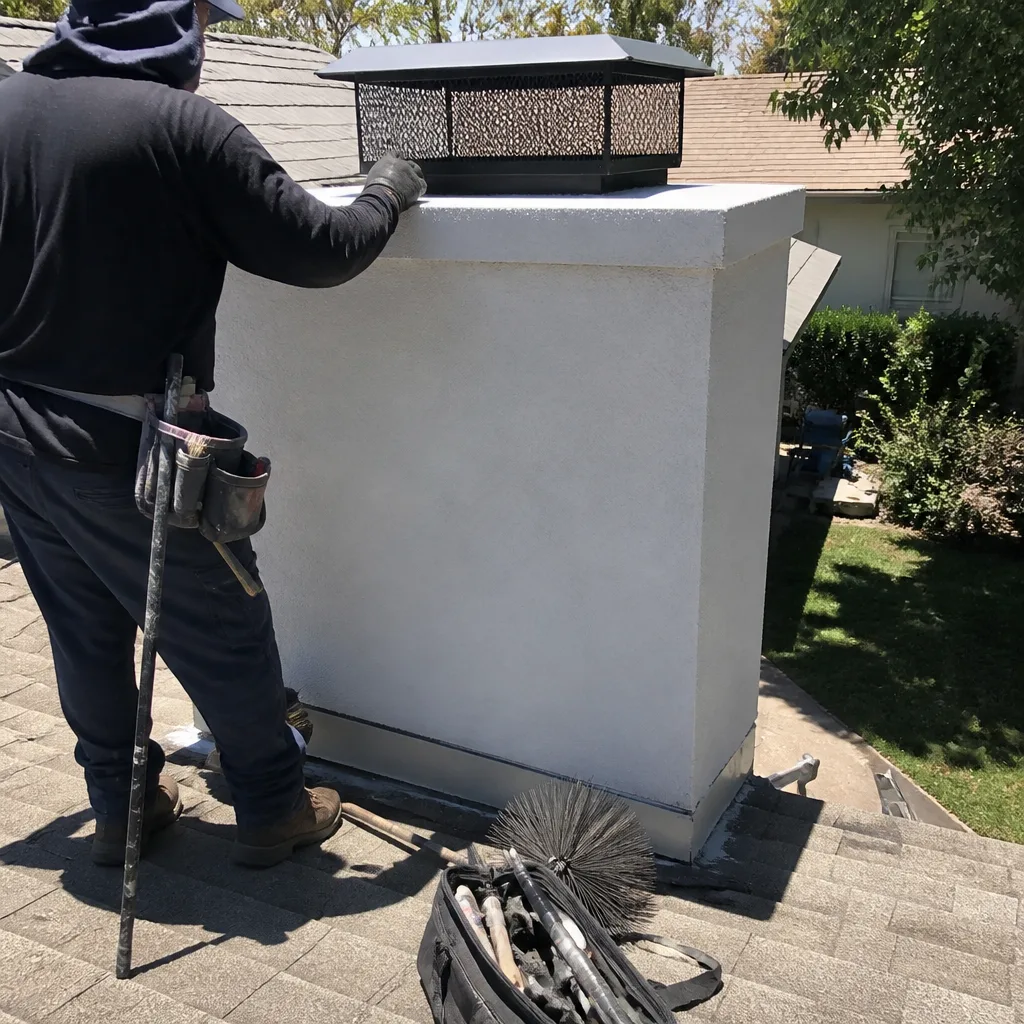 After
When to Call a Professional
Certain chimney situations should never be handled by a homeowner, and a few should trigger an immediate call rather than a scheduled cleaning. For urgent scenarios, review our Chimney Cleaning Emergency Preparedness Guide for El Monte Homes. If you smell smoke in the house when the fireplace isn’t in use, that’s a sign of drafting problems or an obstruction, and it needs professional attention. If you see white staining on the exterior brick of your chimney, that’s efflorescence from water intrusion, and it indicates crown or flashing failure. If you hear animals in the chimney, they need to be removed and the chimney capped before you burn again. And if you’ve never had your chimney inspected since buying your home in El Monte, schedule a Level 2 inspection with a certified specialist before the next burning season. Sherwood Chimney Sweep offers free estimates in El Monte. Call (833) 589-8498 to schedule.
Frequently Asked Questions
A standard chimney cleaning and Level 1 inspection in El Monte typically runs between $180 and $350 depending on the chimney’s condition, accessibility, and whether it’s wood-burning or gas. For detailed pricing factors, see our Chimney Cleaning Cost Breakdown: The El Monte Homeowner’s Reference for 2026. Add a video scan or Level 2 inspection and the price increases accordingly. The cheapest bids usually omit the inspection component entirely. Call (833) 589-8498 for a free, specific estimate based on your chimney.
Ask for the contractor’s CSIA or NFI certification number, then verify it on the certifying organization’s public directory. Both maintain online lookup tools that show current status and expiration. Also verify their California contractor’s license on the CSLB website. This entire process takes under five minutes.
You need a Level 1 with every routine cleaning. You need a Level 2 if you’re buying or selling a home, changing your heating system, have had a chimney fire, or haven’t had the chimney inspected in many years. Given the age of much of El Monte’s housing stock, a Level 2 is often the prudent choice for a first-time inspection.
For wood-burning fireplaces used regularly, yes. Creosote buildup happens with every fire, and the National Fire Protection Association recommends annual inspection and cleaning as needed. For gas fireplaces, the schedule can be longer but shouldn’t be ignored, as gas systems have their own failure modes. The annual service is the cheapest insurance you can buy against a chimney fire.
A qualified chimney contractor will document the damage with photos, explain the severity, and present options. Some issues, like minor liner deterioration, can be addressed with resurfacing products like HeatShield. Others require more extensive work. No repair should proceed without a separate written quote and your explicit approval. Ask whether the contractor offers repair services in-house, or whether they’ll refer you out.
Some do, some don’t. Gas fireplaces and inserts have different inspection requirements than wood systems, including checks of the heat exchanger, gas connections, and venting termination. Ask your contractor directly whether they service gas systems, and what their gas inspection covers. A wood-only specialist may not be equipped to evaluate your gas insert properly.
The Bottom Line
Hiring a chimney cleaning contractor in El Monte comes down to one question: does this person understand the chimney as a fire-containment system, or do they see it as a dirty surface? A specialist names their certification, describes the level of inspection they perform, writes a scope of work, and documents the flue’s condition with photos. A non-specialist offers a flat rate, vague language, and a quick in-and-out. The difference in cost between the two is almost never worth the risk. Your chimney is the one home system where a failure doesn’t mean a leak or a draft. It means fire, inside the walls, where you can’t see it until it’s too late. In El Monte’s older housing stock, that risk is elevated. Call Sherwood Chimney Sweep at (833) 589-8498 for a free estimate from a certified specialist serving El Monte, and know what’s actually inside your flue before you light the next fire.
Written by the team at Sherwood Chimney Sweep, serving El Monte since 2017.