
Last updated October 31, 2026
 Sweep & inspection
 Caps & crowns
 Flue relining
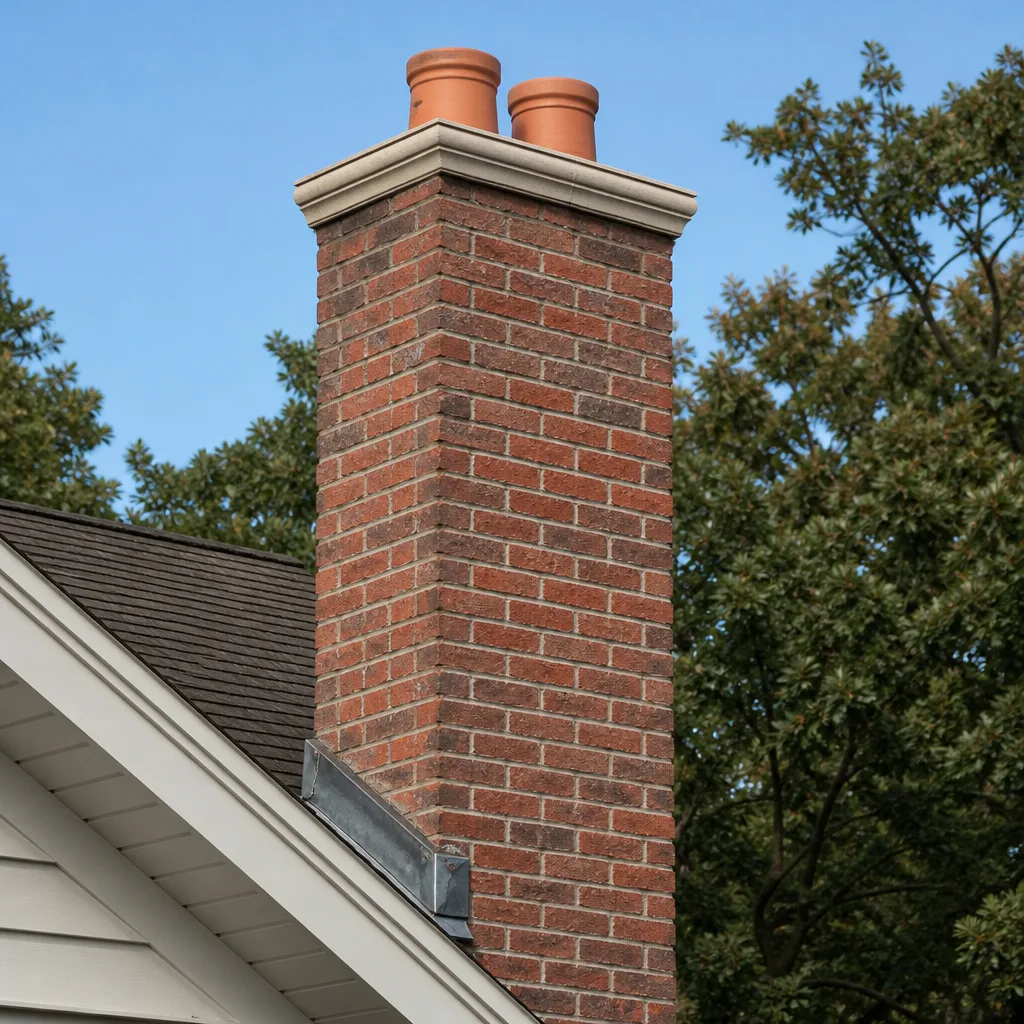 Masonry repair
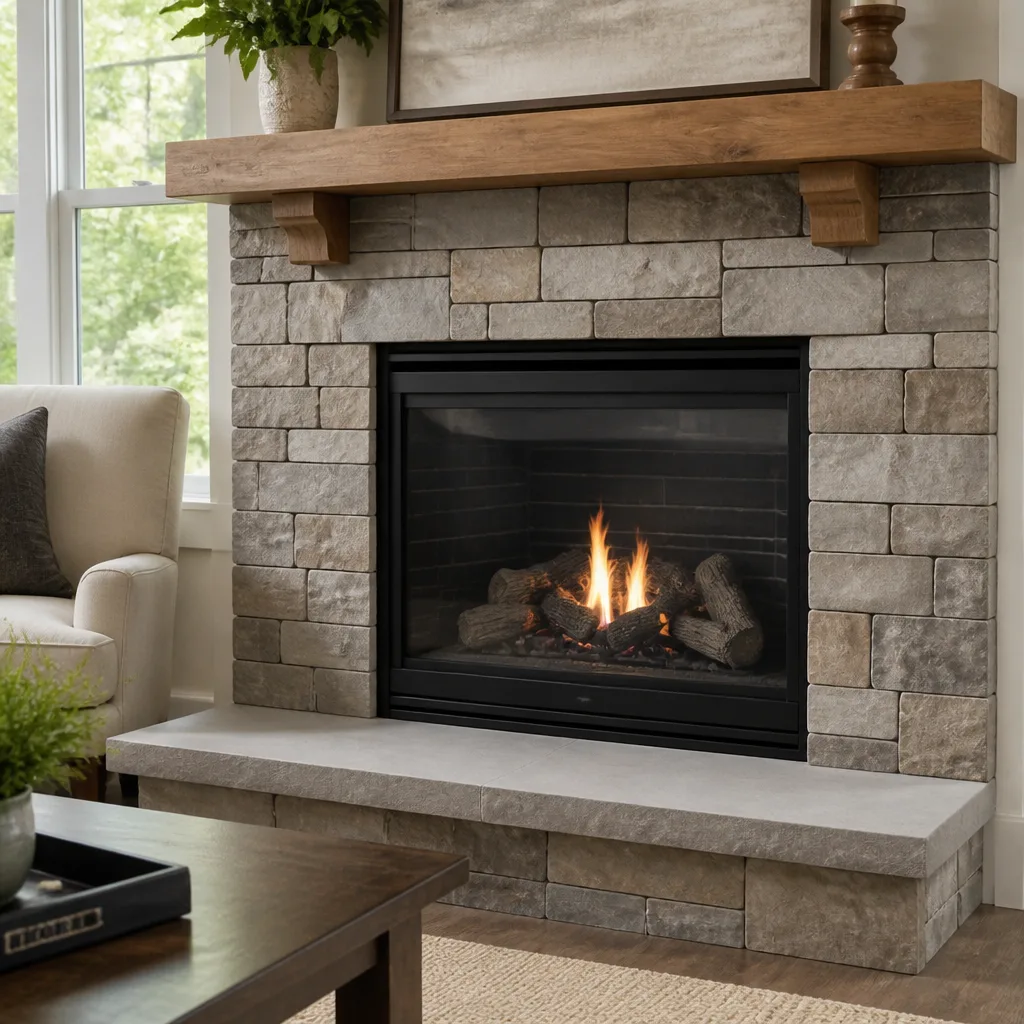 Gas fireplace service
Level 1 sweep and inspection to the NFPA 211 annual standard - flue, crown, cap, and flashing checked and photographed
Chimney sweep logs do not sweep chimneys. They loosen some creosote - which then falls where a brush and vacuum still have to collect it.
Seasonal Chimney Cleaning Care for El Monte: Year-Round Homeowner’s Guide
Scheduling your chimney cleaning in October because that’s what every article says is the right move, unless you live in a climate where “winter” means 55-degree evenings and you lit the fireplace six times last year. El Monte’s Mediterranean climate doesn’t follow the seasonal playbook written for New England or the Midwest. Here, the real threats to your chimney arrive with Santa Ana winds, winter rain, and long stretches of disuse, not heavy snow load or months of nightly burning. This guide rebuilds the seasonal maintenance calendar around how El Monte homes actually use fireplaces, and what that means for creosote, moisture, and the structural health of your flue. For more guides & resources, see our blog.
Styles & brands we work with
Quick Answer
In El Monte, the most important chimney maintenance happens after the rainy season ends in spring and before Santa Ana wind season peaks in fall, not in a mad October rush. If you burn fewer than ten fires a year, an annual sweep is still the right cadence, but your bigger risks are water intrusion, cap damage, and debris blockage from wind-driven material. Book your sweep during El Monte’s mild shoulder seasons (March to May, or September) to get the appointment window you actually want.
Table of Contents
- Why El Monte’s Climate Breaks the Standard Chimney Calendar
- Santa Ana Winds: The Overlooked Threat to El Monte Chimneys
- Why Post-Rain Inspection Beats Pre-Winter Cleaning Here
- Low-Frequency Burning: What Fewer Than 10 Fires a Year Means for Creosote
- The El Monte Seasonal Chimney Maintenance Schedule
- Summer Tasks That Prevent Fall Problems
- Using El Monte’s Shoulder Seasons to Beat the October Rush
- Common Mistakes to Avoid
- When to Call a Professional
- Frequently Asked Questions
- The Bottom Line
Why El Monte’s Climate Breaks the Standard Chimney Calendar
Most chimney maintenance advice you’ll find online was written for climates with real winters. Those guides assume you’re burning wood every night from November through March, which means creosote accumulates fast and a pre-winter sweep is non-negotiable safety prep. El Monte doesn’t work that way. Our heating season is short, intermittent, and often decorative rather than functional.
Here’s what that means for your chimney. First, creosote accumulates much more slowly when you burn a fire twice a month instead of every night. That sounds like good news, and it is, but it creates a different problem: homeowners assume low usage means low maintenance, so they skip inspections for years. A chimney that sits unused for eight months straight is still exposed to weather, birds, and debris. The threats shift from combustion byproducts to moisture and blockage.
Second, El Monte’s temperature swings are mild but real. Summer daytime highs regularly push past 90°F, while winter nights can dip into the 40s. That thermal cycling causes expansion and contraction in masonry, crown sealant, and flashing. Hairline cracks open slowly over years. They don’t announce themselves. By the time water staining shows on the ceiling near the chimney, the crack has been doing quiet damage for a long time.
Third, our air quality regulations mean burn days are restricted during winter months in much of the San Gabriel Valley. Homeowners who want a fire often can’t have one on the coldest nights. That further reduces actual usage and reinforces the pattern of low-frequency burning that makes El Monte chimney care different from what national articles describe. The Sherwood Chimney Sweep home team sees this pattern constantly: chimneys in El Monte that look clean visually but have structural issues that accumulated during the off-season.
Santa Ana Winds: The Overlooked Threat to El Monte Chimneys
Santa Ana winds are the single most El Monte-specific chimney hazard that generic maintenance guides never mention. These winds blow in from the northeast, often sustained at 30 to 40 mph with gusts much higher, typically between September and February. They carry dust, sand, dry leaves, and small branches across the San Gabriel Valley. And your chimney cap is directly in their path.
What we’ve seen repeatedly in El Monte and surrounding areas: Santa Ana winds can strip loose chimney caps, bend or detach cap screens, and drive debris deep into flues. A cap that was slightly loose after five years of thermal cycling can fail completely in one strong wind event. Once the cap is gone, everything gets in: leaves, twigs, nesting material, and rain during winter storms.
There’s a secondary problem specific to Santa Ana conditions: negative pressure. When sustained high winds blow across a chimney opening, they can create a downdraft effect that pulls air down the flue into your living space. If your damper doesn’t seal well, or the damper gasket is worn, smoke and carbon monoxide from a fire can be pushed back into the room. Even without a fire burning, a drafty chimney can pull heated or cooled air out of your home, raising your energy bills during the wind season.
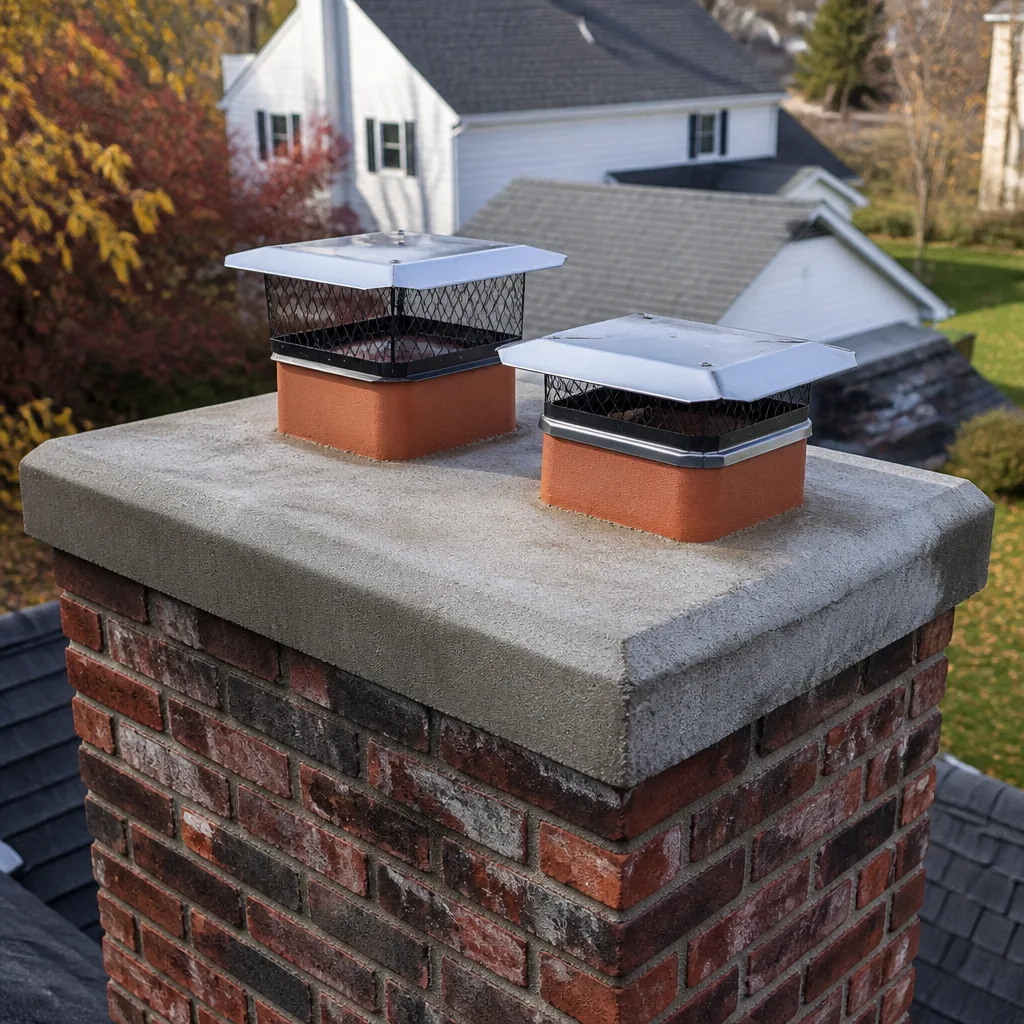
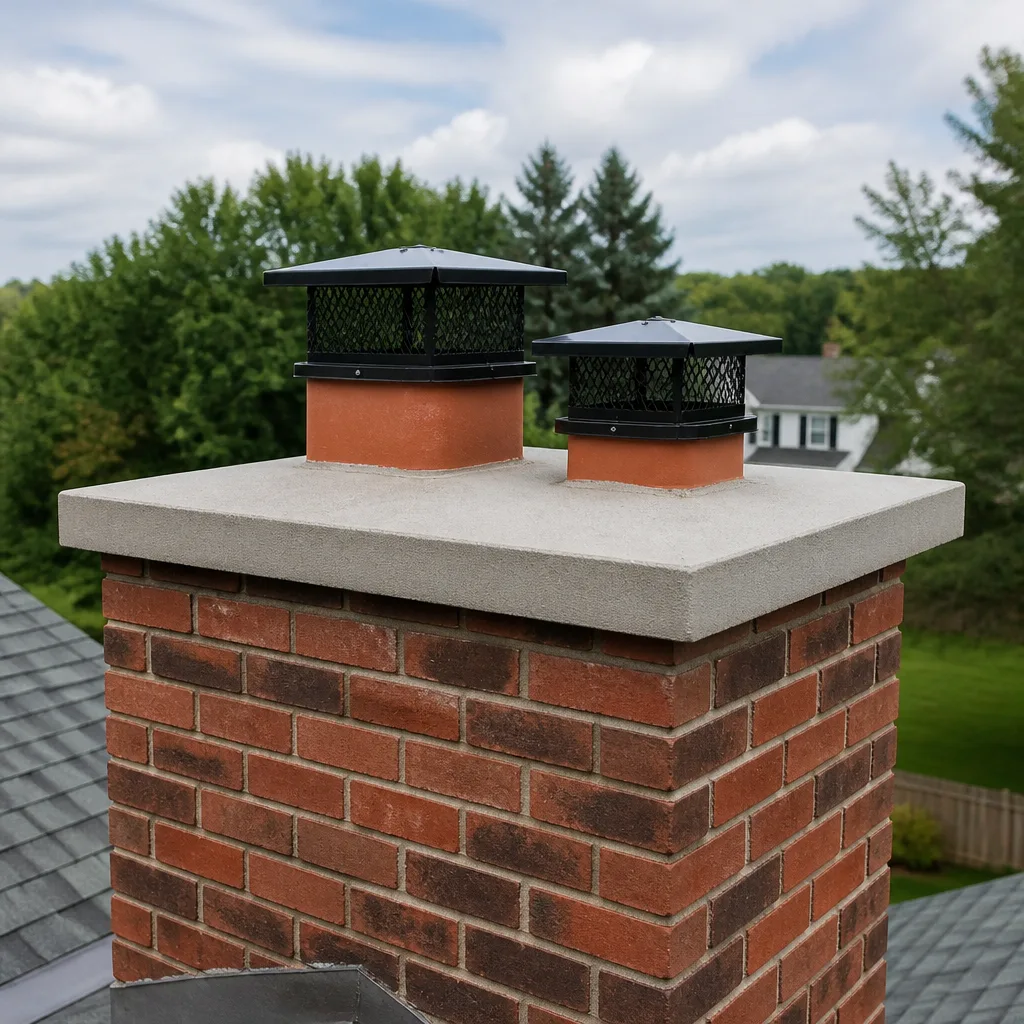
The fix is straightforward and belongs on every El Monte homeowner’s fall checklist. Inspect the chimney cap before Santa Ana season starts in earnest. Check that the cap is secured, the screen mesh is intact, and the damper seats properly when closed. If you see any rust, bent mesh, or gaps around the cap base, address it in September or early October, before the winds arrive. Sherwood Chimney Sweep stocks professional-grade caps through Olympia Chimney and Copperfield supply lines, the same manufacturers specified by certified chimney engineers. A proper cap replacement done correctly lasts a decade or more, and it’s far cheaper than repairing water damage or clearing a fully blocked flue.
One more Santa Ana specific note: wind-driven embers are a real concern for homes in the foothill-adjacent neighborhoods of El Monte and nearby communities. Even if you’re not in a designated high fire hazard zone, an uncapped or poorly screened chimney can become an ember entry point during red flag conditions. A properly fitted cap with 3/4-inch mesh screen is a meaningful fire-prevention upgrade, not just a debris blocker.
Why Post-Rain Inspection Beats Pre-Winter Cleaning Here
In most of the country, the critical chimney moment is fall: clean before the burn season, because once snow flies, the roof is dangerous and the flue is in constant use. In El Monte, the critical moment is spring, after the rainy season ends. Here’s why.
Our annual rainfall comes in concentrated bursts, often just a handful of significant storms between November and March. A chimney that has tiny cracks in its crown, shaling bricks, or worn flashing can absorb water during each storm. The damage isn’t dramatic right away. It accumulates. Water works into masonry pores, and when the temperature drops at night, that water expands slightly, opening the cracks a bit more. Over several years, a hairline crack becomes a spalling brick face, and a spalling brick face becomes a structural repair.
By March or April, you can see the results. Water staining on the ceiling near the chimney, efflorescence (white mineral deposits) on the exterior brick, damp smells in the firebox, or rust on the damper assembly. These are all signs that water has been finding its way in. Waiting until October to address them means the damage has had seven more months to progress, including through the next rainy season’s first storms.
The smart El Monte cadence is: sweep when you need it, inspect when the rain stops. A post-rain inspection catches water intrusion issues at the exact moment they’re most visible and before a full summer of heat bakes any lingering moisture into the masonry, causing further cracking. If you only schedule one professional chimney visit per year, make it a spring inspection that includes a cleaning as needed. You’ll catch structural problems early, and you’ll still have a clean flue for the limited burning you’ll do next winter. If you’ve got a masonry chimney that’s never been checked for crown cracks, or you’ve noticed dampness in the firebox, this is the single highest-value appointment you can book. Sherwood’s crew has spent years diagnosing water damage in Chimney Repair in South Pasadena homes facing the same El Monte rainfall patterns, and the fix is almost always simpler when caught early.
Low-Frequency Burning: What Fewer Than 10 Fires a Year Means for Creosote
Most national chimney guides operate on the assumption that creosote buildup is the primary danger. That’s true if you burn two cords of wood every winter. In El Monte, many homeowners light a fire fewer than ten times per year. Some years, fewer than five. That changes the risk profile significantly.
Creosote forms when wood smoke condenses on the cooler walls of the chimney. The amount produced depends on burn frequency, wood type, and burn temperature. A low-frequency burner who uses seasoned hardwood and builds hot, efficient fires produces very little creosote. But there’s a catch: low-frequency burners often burn less-than-ideal wood because they’re not thinking about seasoning. They grab a bundle from the grocery store parking lot, or they burn scrap from a backyard project. That wood might be damp, partially treated, or high in sap. One badly built fire can deposit more creosote than a week of good fires.
Even more important: creosote is graded in three stages. Stage 1 is a light, dusty coating that a professional sweep removes easily. Stage 2 is harder, tar-like, and requires more aggressive mechanical cleaning. Stage 3 is glazed, hardened creosote that can require chemical treatment or specialized tools. The stage matters more than the total quantity, and low-frequency burners can develop stage 2 creosote over several years without ever realizing it, especially if they burn those convenience-store bundles.
The practical guidance for El Monte’s occasional fire users: annual sweeping is still the right cadence. Even with minimal visible buildup, the sweep confirms the flue is clear, the damper operates, and no birds or debris have moved in during the eight months you didn’t think about the fireplace. It’s cheap insurance compared to pulling a bird’s nest out in December or discovering the damper is seized on the first cold night you actually want a fire. Skipping years because you “hardly use it” is the most common mistake we encounter.
The El Monte Seasonal Chimney Maintenance Schedule
Spring (March to May): Inspect and Repair
- Book a post-rain inspection. This is the highest-value chimney appointment in El Monte. The chimney professional checks crown sealant, flashing, brick integrity, cap condition, and interior flue surfaces after winter moisture exposure.
- Sweep if needed. If you accumulated creosote during winter burning, spring sweeping means the flue sits clean during the humid off-season and is ready to go in fall.
- Address water damage immediately. Cracks, spalling, or water staining found in spring should be repaired before summer heat compounds the damage. HeatShield ceramic resurfacing is an option for deteriorating flue liners that doesn’t require a full tear-out.
- Check the damper. Test the open-close action. Lubricate if stiff. A damper that doesn’t fully close leaks air all summer.
Summer (June to August): Prepare for Wind Season
- Verify cap and screen integrity. Santa Ana winds arrive in fall. Check that your cap is secure and the mesh screen has no holes larger than 3/4 inch. Replace any damaged components.
- Seal crown cracks. Summer’s dry heat is the best time to apply masonry sealant or crown repair products. Materials cure faster and bond better in warm, dry conditions.
- Clean the dryer vent. You’re already thinking about fire prevention. Clogged dryer vents are the leading cause of household dryer fires. Get it done while you’re in maintenance mode. Sherwood Chimney Sweep handles both chimney and Dryer Vent Cleaning in South Pasadena work as one fire-prevention contractor.
- Schedule fall service now. Book your pre-burn-season sweep or inspection in June or July. You’ll get the appointment slot you actually want, not what’s left.
Fall (September to November): Wind-Ready and Burn-Ready
- Pre-burn sweep if you didn’t do one in spring. Yes, fall is the traditional time. It works fine in El Monte as long as you also did your spring inspection.
- Final cap check before Santa Ana season. This is the last chance to catch damage before sustained winds test every weak point.
- Stock good firewood. Buy seasoned hardwood at least a month before you plan to burn. Store it covered but off the ground. Avoid grocery-store bundles unless it’s all you can find.
- Verify your damper seals tightly. A tight damper keeps Santa Ana downdrafts out of your living space.
Winter (December to February): Use Carefully, Watch for Red Flags
- Burn only seasoned hardwood. Green or wet wood creates more creosote in one fire than dry wood creates in ten.
- Watch for downdrafts. If smoke enters the room during Santa Ana conditions, open a window slightly to relieve negative pressure, and have the cap and damper checked.
- Note any changes. Unusual odors after rain, water in the firebox, or visible smoke during the first few minutes of a fire all signal issues worth investigating.
- Schedule your spring inspection early. Book it in February for March. The best El Monte chimney professionals fill spring schedules quickly as homeowners discover rain-related problems.
Summer Tasks That Prevent Fall Problems
Summer is when disciplined El Monte homeowners do the work that prevents their fall from turning into a scramble. The fireplace is out of sight and out of mind for most people, but that’s exactly when a few hours of attention save you from being that person calling around in October while the first cold snap hits.
Cap screening is the highest-value summer task. If your cap screen is intact and the cap is secured, you’ve eliminated the main entry point for debris, birds, and wind-driven material. A professional can inspect this in twenty minutes and replace a damaged cap in under an hour. It costs far less than clearing a flue packed with nesting material in November.
Damper lubrication is quick and often overlooked. Most dampers are simple metal assemblies that benefit from a high-temperature lubricant on pivot points. A damper that opens and closes smoothly is one you’ll actually use correctly. A seized damper leads to fires built with the damper in whatever position it’s stuck in, which can mean smoke pouring into the room.
Crown sealant checking is the third summer task that pays off all year. The chimney crown is the cement surface at the top of the masonry. Its job is to shed water away from the flue. Crowns crack over time, and a cracked crown lets water directly into the masonry. Summer’s dry conditions are perfect for applying crown repair sealant, which bonds best when temperatures are warm and humidity is low. If you’ve never looked at your crown, you’re not alone, but it’s one of the most common places we find developing problems in El Monte homes.
None of these tasks require burning-season urgency, and that’s the point. You’re doing them in July and August, when your chimney is doing nothing anyway. When October arrives and every chimney service is booked out for weeks, your system is already wind-ready, burn-ready, and inspected.
Using El Monte’s Shoulder Seasons to Beat the October Rush
Every trade has busy seasons, and chimney sweeping’s busy season in El Monte runs from October through December. Here’s a fact most guides won’t tell you: if you call for chimney service in late October, you may wait two or three weeks for an appointment. If you call in March or April, you might get same-week service. The quality of the work is identical. The convenience is not.
El Monte’s shoulder seasons, March through May and September, are ideal for chimney work. The weather is mild but not hot enough that roof work is uncomfortable. The rain has either just stopped (spring) or not yet started (fall). And demand is low enough that you can choose the exact day and time that works for you, rather than taking whatever slot is left.
There’s a financial angle too, though it’s subtler. Catching a problem in spring means repairing it before it worsens. A small crown crack found in April might cost a few hundred dollars to seal. The same crack left through summer heat and next winter’s rain might become spalling brick and a $2,000 masonry repair. The timing of your inspection isn’t just about convenience, it’s about catching issues at their cheapest moment.
If you’re a low-frequency burner who uses the fireplace a handful of times each winter, the smart cadence is one spring appointment that covers sweep, inspection, and any minor repairs. Book it for late March or April. You’ll get the appointment time you want, the crew will be thorough rather than rushed, and you’ll have nine months of peace of mind before the fireplace gets used again.
Common Mistakes to Avoid
- Assuming low usage means no maintenance. Even if you never light a fire, your chimney is exposed to rain, wind, birds, and thermal cycling. The inspection is about the structure, not just the creosote.
- Following the national “clean every fall” advice without adapting it. In El Monte, your high-value appointment is spring inspection. Fall sweeping is fine if you burn regularly, but it shouldn’t be your only chimney contact.
- Ignoring the chimney cap. Most El Monte chimney problems we see start with a missing or damaged cap. It’s a small component with an outsized role in protecting the entire system.
- Burning grocery-store wood bundles without checking moisture content. Convenience bundles are often higher moisture, which means more creosote per fire. Buy seasoned wood from a proper source, or check moisture with a meter before burning.
- Delaying repairs because the problem “isn’t that bad yet.” A small crack and a big repair are the same problem at different points in time. The clock only runs one direction.
- Hiring a generalist handyman for chimney work. Chimney systems involve fire safety, airflow dynamics, and masonry science. An inspector should be a chimney specialist. The materials matter too: professional-grade products like DuraFlex liners and HeatShield resurfacing compounds aren’t available at the hardware store, and they’re not installable by someone who “does a bit of everything.”
- Forgetting the dryer vent. If you’re doing fire-prevention work on the chimney, the dryer vent deserves the same attention. Lint buildup is the leading cause of household dryer fires, and it’s often the vent no one has cleaned since the house was built.
When to Call a Professional
Some chimney work is genuinely DIY-appropriate: cleaning the firebox, checking the damper moves, visually inspecting the cap from the ground with binoculars. Anything beyond that belongs with a specialist. For regulated work, review Chimney Cleaning Permits, Codes & Inspections in CA: What You Need to Know.
Call a professional if you see water staining on the ceiling near the chimney, notice white mineral deposits on exterior brick, smell a damp or musty odor from the fireplace after rain, find debris or nesting material in the firebox, see visible cracks in the crown or masonry, or haven’t had the flue inspected in more than two years. These are not minor issues. They indicate water intrusion, blockage, or structural deterioration, and each one gets more expensive to fix the longer you wait.
If you’re in El Monte and want an honest assessment before committing to any repair, Sherwood Chimney Sweep offers free estimates, call (833) 589-8498. We’ll show you camera footage of whatever we find, and explain what can wait and what can’t.
Frequently Asked Questions
Once per year is the right cadence for most El Monte homes, even if you burn fewer than ten fires annually. The cleaning itself may be quick for a low-frequency burner, but the annual visit confirms the system is clear, the damper works, and no water damage developed during the rainy season. Schedule it in spring to catch rain-related issues at their earliest, most repairable stage. Call (833) 589-8498 for a free estimate if you’re overdue.
Yes, but you might not need aggressive creosote removal. What you need is structural verification: the flue is clear of debris and animal nests, the cap is intact and screened, and the damper seals properly. Holiday-only fireplaces in El Monte collect problems during their eight months of disuse, not during their few hours of use. An annual inspection catches those problems before they compound.
Santa Ana winds can loosen or strip chimney caps, drive debris into the flue, and create downdrafts that push smoke back into the house. They expose weak points in the cap, crown, and damper that might have held fine under normal conditions. Before Santa Ana season starts in September, verify your cap is secured and the screen mesh has no holes, and make sure your damper closes tightly. Our Chimney Cleaning Emergency Preparedness Guide for El Monte Homes covers what to check before high-wind events. A cap sized and installed through professional supply lines like Olympia Chimney or Copperfield stands up to these winds far better than hardware-store varieties.
Spring is the better season for El Monte homeowners. A spring appointment catches water damage from winter rain at its most visible moment, before summer heat bakes moisture deep into masonry. You’ll also get better appointment availability and often more thorough attention from whoever does the work. If you burn heavily, add a quick fall sweep as well. Call (833) 589-8498 to schedule either one.
A standard chimney sweep in El Monte typically runs $180 to $340, depending on the chimney’s size, accessibility, and how much creosote has built up. See our Chimney Cleaning Cost Breakdown: The El Monte Homeowner’s Reference for 2026 for detailed pricing factors. A combined sweep and inspection appointment is the most common package and usually sits at the lower end of that range for a single-story masonry chimney. Larger flues, second-story roof access, and heavy stage two or stage three creosote push the price toward the upper end. Get an exact quote by calling (833) 589-8498 – estimates are free.
Best case, you’ve got creosote that’s hardened into stage two or stage three deposits, which require specialized mechanical or chemical removal and cost more than routine sweeping. Worst case, you’ve also got water damage that’s been progressing silently: cracked crown, spalling brick, or a deteriorated flue liner. In El Monte’s climate, skipping years means structural issues go unrepaired through multiple rainy seasons, and by the time you notice, the fix is a serious repair rather than a maintenance task. If you haven’t had the chimney looked at in years, start with an inspection, not a sweep, so you know exactly what you’re dealing with.
The Bottom Line
El Monte homeowners don’t need to follow the national chimney calendar. We need to follow the local one. The most valuable appointment is the spring post-rain inspection, not the October pre-winter sweep. The most dangerous season is Santa Ana wind season, when caps fail and downdrafts push air and debris where they don’t belong. The most common mistake is assuming low usage means low risk, when in fact an unused chimney is quietly absorbing rain, wind, and animal intrusion for months at a time.
Book one annual inspection in spring. Keep the cap maintained. Burn only seasoned wood. Address small repairs before they become structural projects. And know when to call a chimney specialist rather than a generalist. That’s the whole system, and it works for El Monte’s actual weather, not someone else’s.
Ready to get your chimney on the right seasonal schedule? Call Sherwood Chimney Sweep at (833) 589-8498 for a free estimate. We serve the full chimney system, from annual sweep to structural repair, with professional-grade materials and straight answers about what your chimney actually needs.
Written by the team at Sherwood Chimney Sweep, serving El Monte since 2017.
See the difference
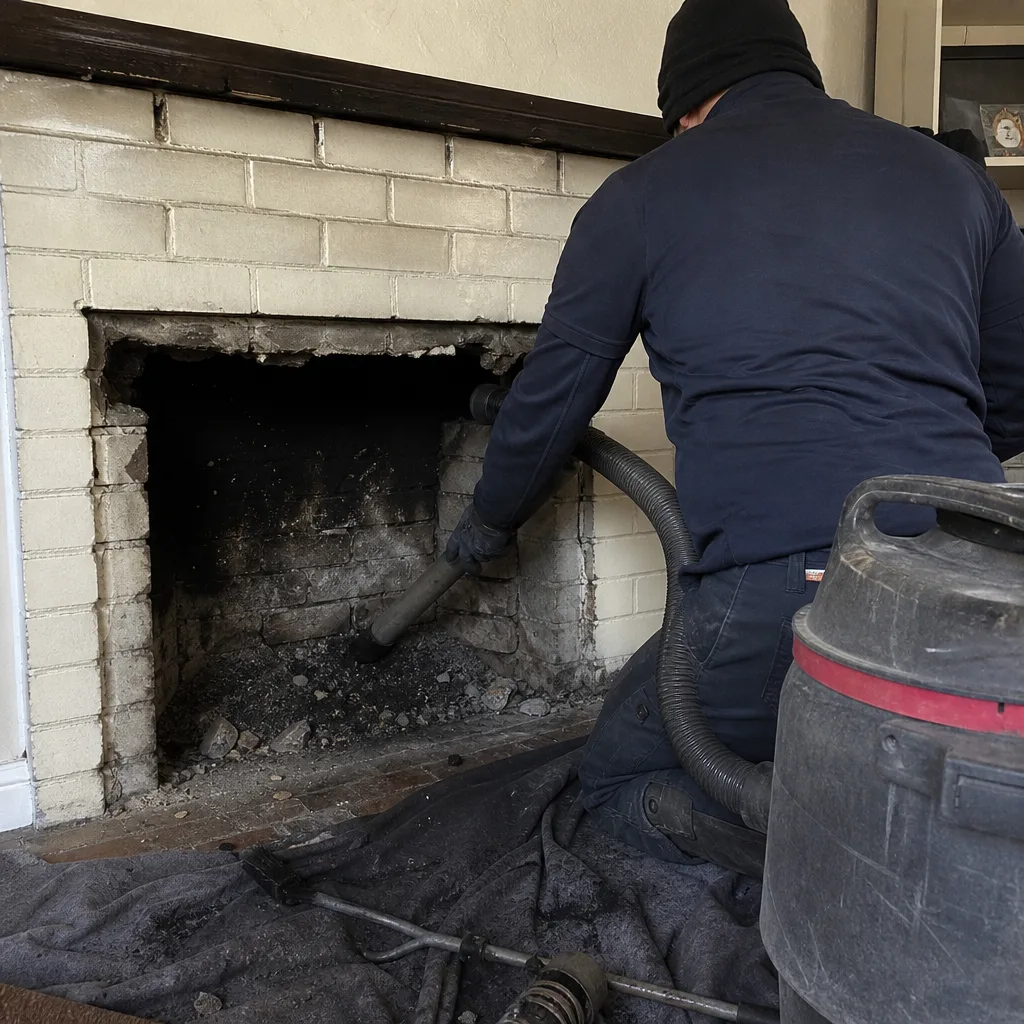 Before
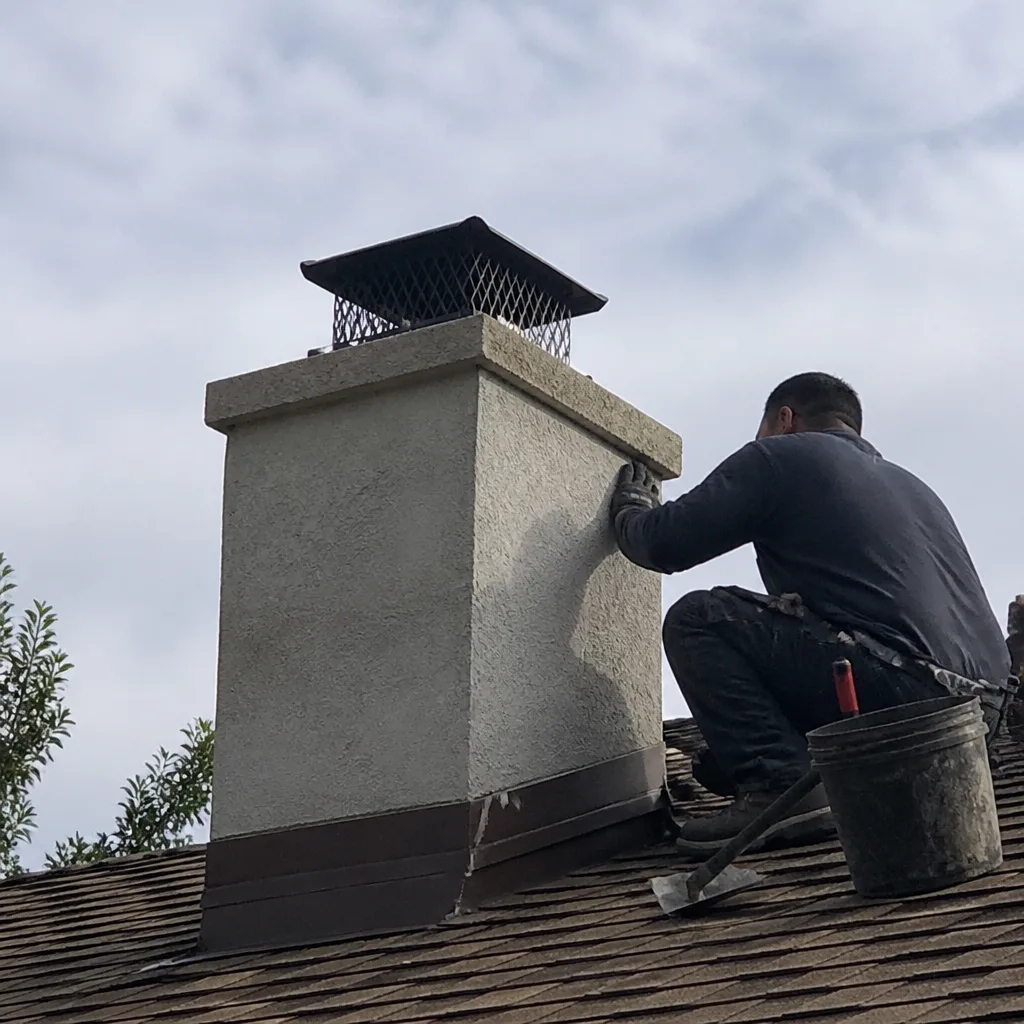 After
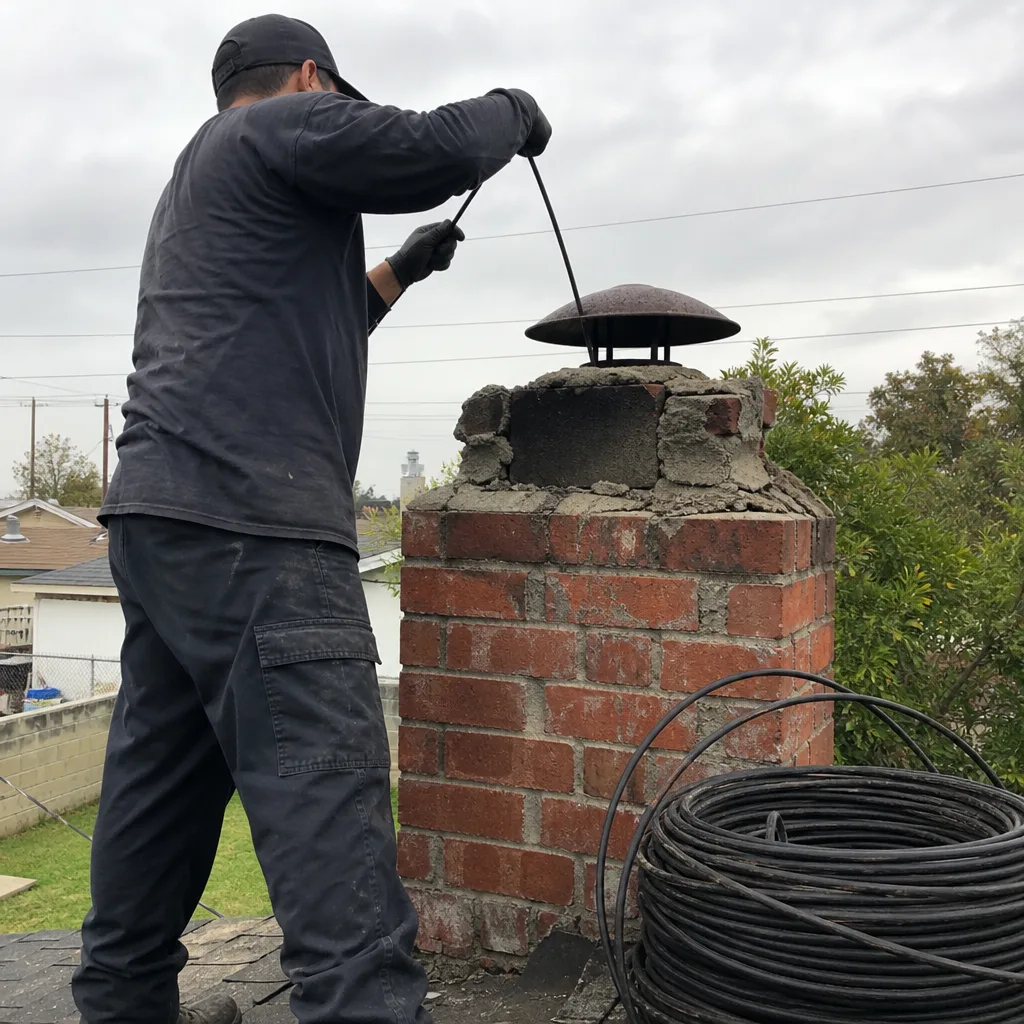 Before
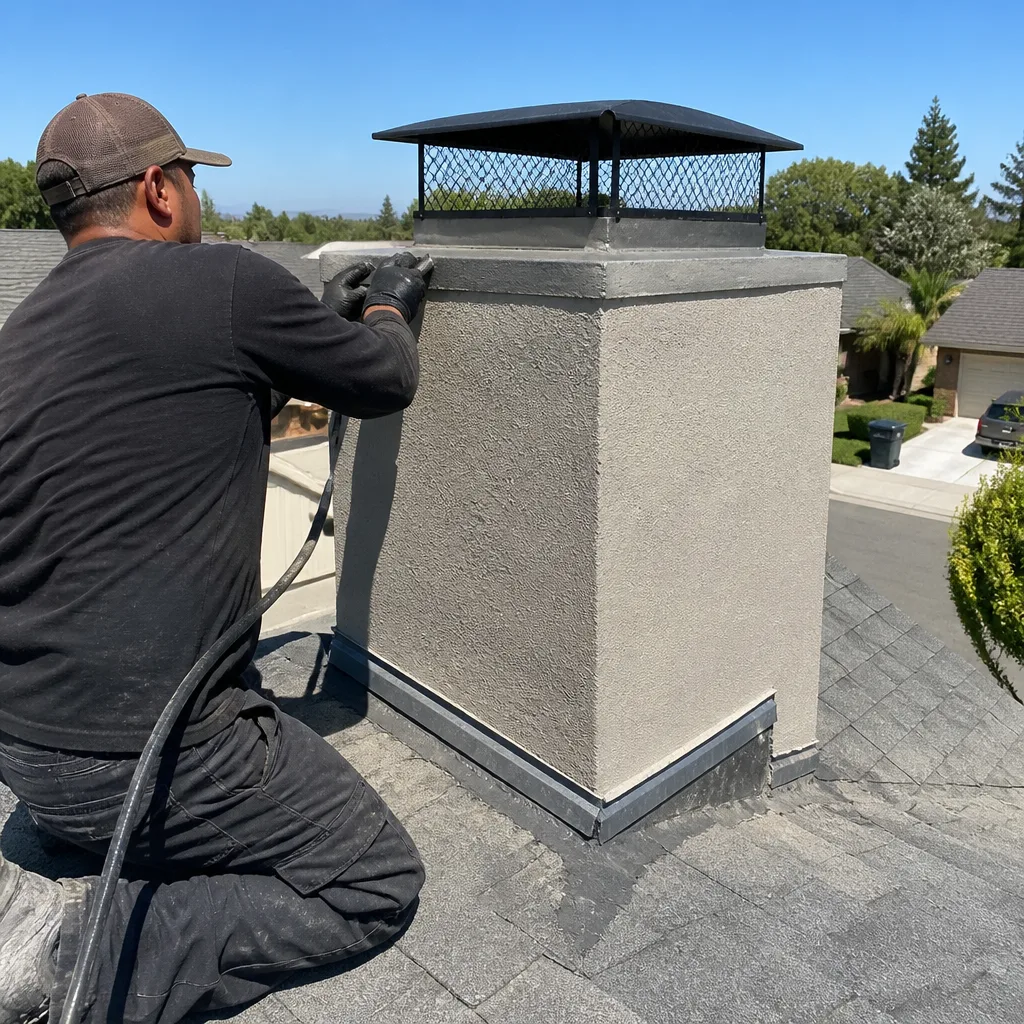 After
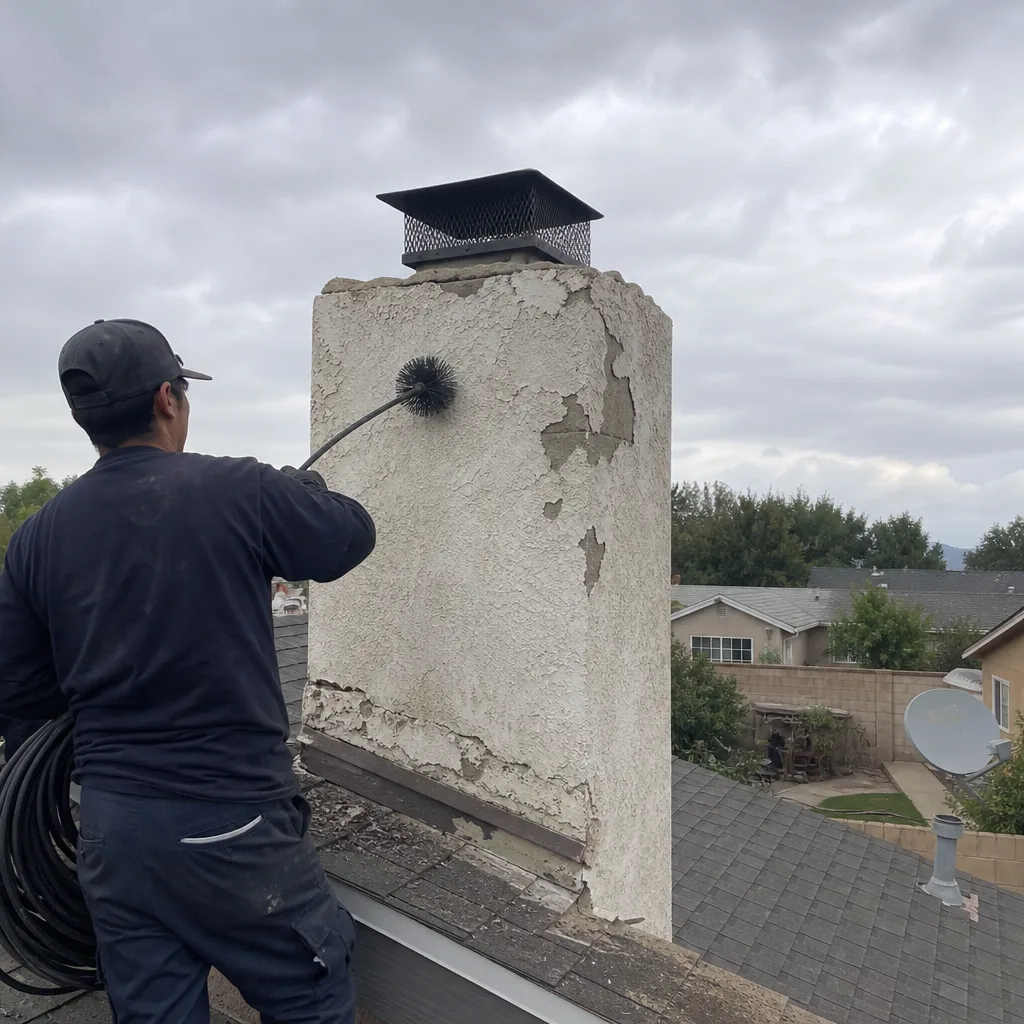 Before
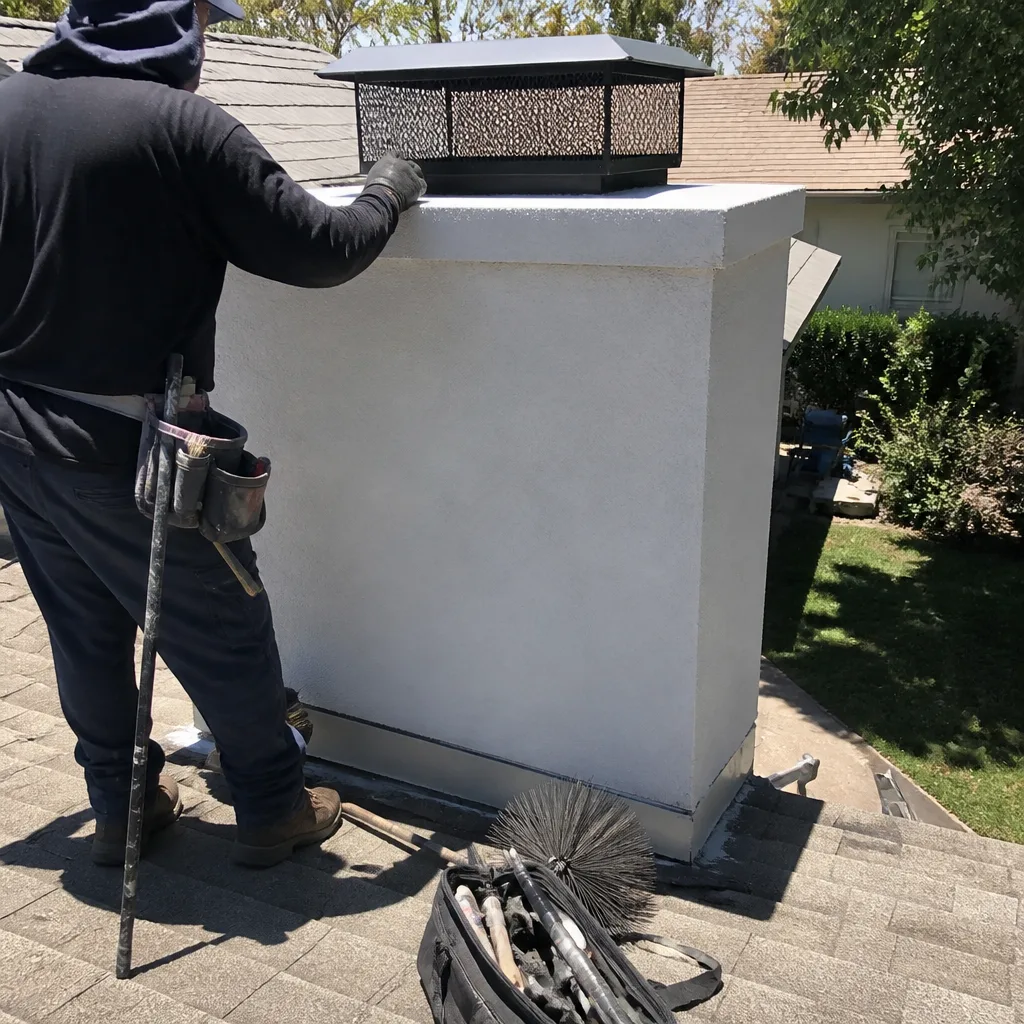 After